Overview
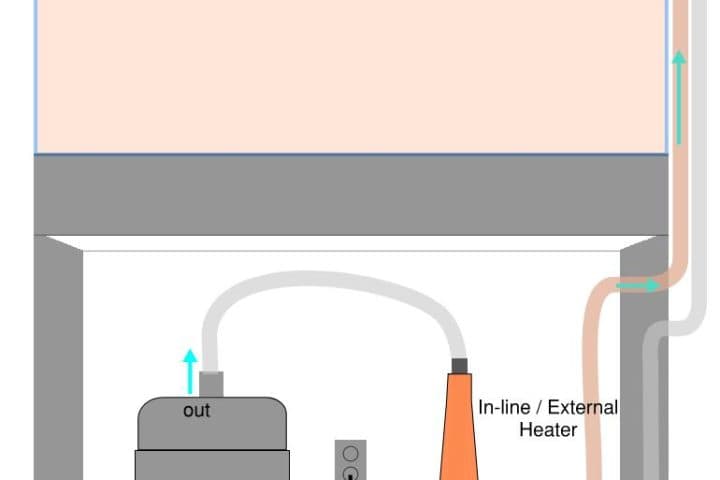
Injecting CO2 has become a popular setup for high tech planted tanks. It provides optimal growth for plants and has the advantage of combating algae. Tune it with intense lighting and you can create any type of landscape in mind. Diffusing CO2 now comes with options. The most basic type of diffuser uses a device that releases CO2 directly inside your tank. Now, you can use an atomizer or CO2 reactor to help saturate the CO2 before it even enters your aquarium. Compare the pros and cons of CO2 reactors and other diffusion methods to see what works best for your aquarium.
In-Tank Diffusion
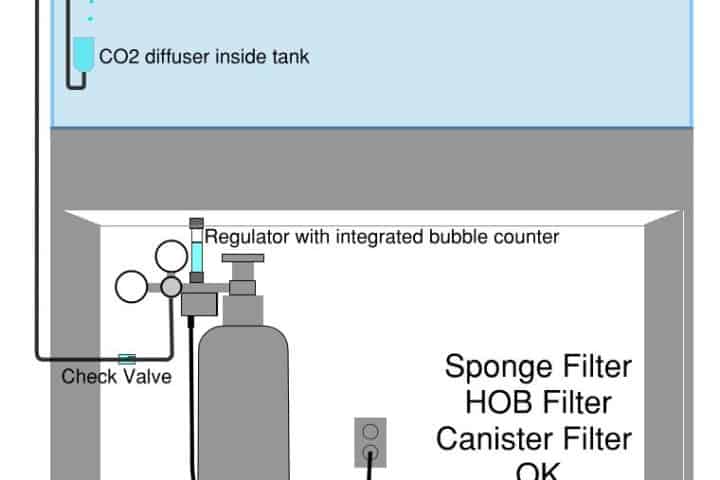
The most simple and popular CO2 diffusion method is an in-tank diffuser. They’re not integrated with your filtration system, so you can use it independently of a canister, sponge or HOB filter. Airline tubes connect your CO2 regulator directly to a diffuser that’s then placed inside your tank. That’s literally it. The diffuser has a ceramic disc that helps break down gas into tiny bubbles which then circulates throughout the water. The gas bubble needs a chance to circulate through your tank before it becomes saturated and absorbed by plants. If it’s simply rising vertically up, there’s a chance it’s quickly escaping the water’s surface and not being consumed. It’s best to place it opposite of the outlet where water can draw it down, giving it more time to get stuck on plants and hardscape.


There are many options when it comes to in-tank diffusers, from stainless steel to clear glass. They come in different shapes and sizes, sometimes drawing attention to the high-tech planted tank. One of the downfalls to using in-tank diffusers is the maintenance. Anything placed inside the tank is prone to algae growth and requires cleaning. Also, the ceramic disc may become clogged over time and needs servicing as well. You can submerge it in a 50/50 solution of bleach and water as explained by Aquarium Co-op.
In-Line Diffusion
CO2 Atomizer
Atomizers are the next easy setup for CO2 diffusion, but they do not work with sponge or HOB filters. They can only be used with canister filters or a filtration type that utilizes an outflow hose. This is the hose that’s releasing the clean, filtered water back into the tank. There’s a chamber that mixes CO2 together with the water right before it enters your aquarium. The device is small and lightweight, making it a very simple installation.
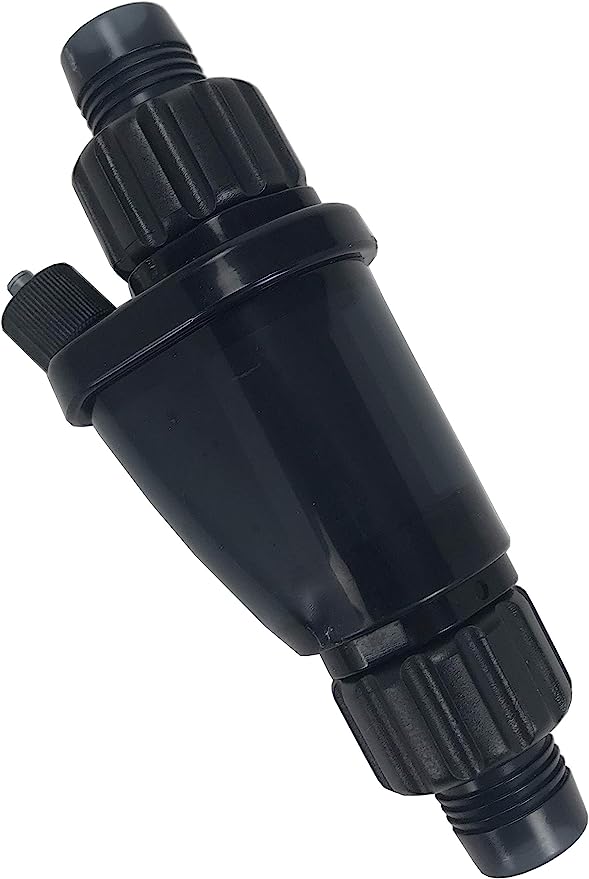
The benefits of an atomizer is that the CO2 is more saturated as it enters your aquarium. It will, however, produce some very fine bubbles. It’s so small that it’ll often be described as a mist or smoke-like flow. Some good quality ones will produce such a small mist that it’s hardly even noticeable. Cleaning the atomizer is as simple as disconnecting it and soaking in some bleach or hydrogen peroxide.

CO2 Reactor
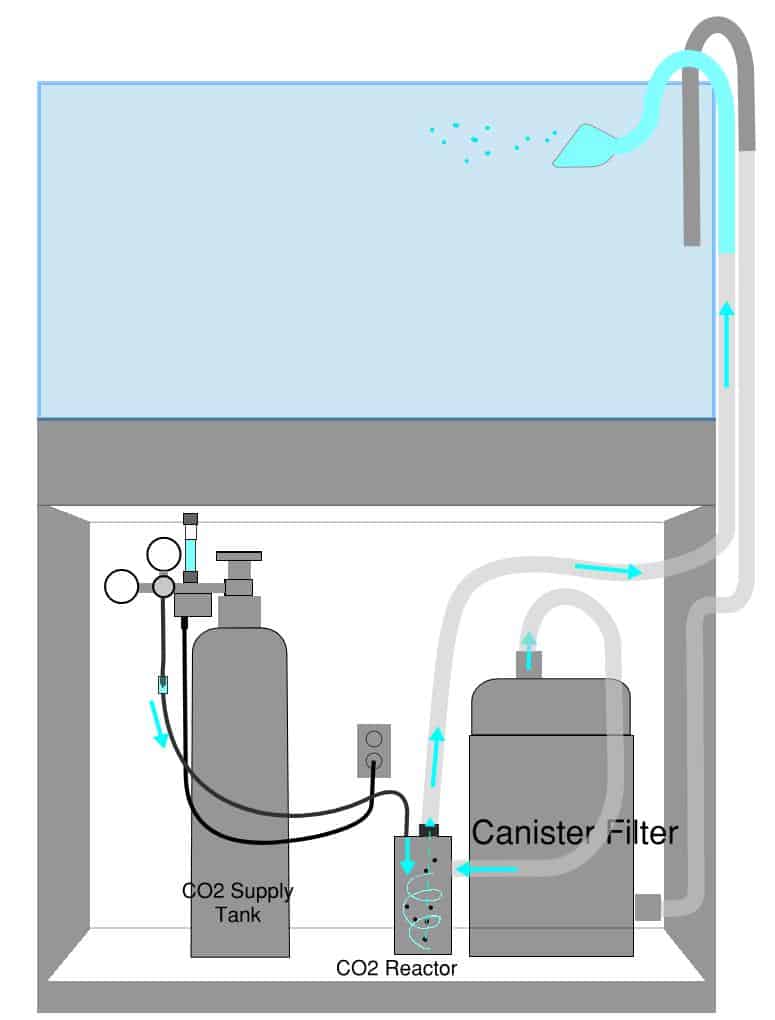
Reactors can efficiently saturate your CO2 before it enters the tank. Similar to an atomizer, it connects to your canister filter and cannot be used with a HOB or sponge filter. It mixes CO2 with water but has the main advantage of not producing any bubbles or mist. People love CO2 reactors for this very reason. It saturates efficiently and does not leave any mist or bubbles that could look like debris in your tank. Although there is research that shows plants doing better with CO2 mist, most plants are not compromised without it.
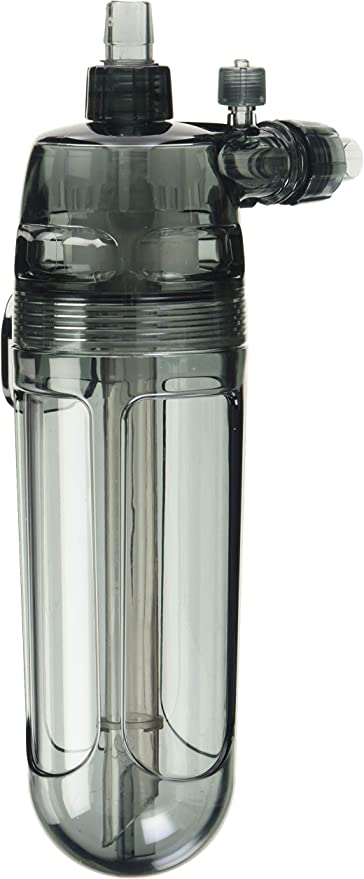

The downside of the CO2 reactor is the size and assembly. Because the larger chamber is connected to your filter outflow, it will reduce the water pressure. You may need to upsize your canister filter if you plan to use a CO2 reactor with the combination of an inline heater. Some reactors also require it to be fully upright and this can lead to space constraints. You cannot tilt or place the reactor horizontal. If you have a small aquarium cabinet, this will take up quite room in addition to your filter and CO2 tank. It’s not just the physical space that’s a concern, you need to provide room for all hoses to route and bend smoothly without kinks.
All Things Considered
If you have a sponge or HOB filter, a CO2 in-tank diffuser is your only option. The setup is easy but a diffuser will have to occupy space inside your aquarium. If you’re using a canister filter, you have the option of upgrading to an atomizer or canister filter. Atomizers will leave a fine mist in your aquarium. They’re small in size and are extremely easy to install. CO2 reactors need to be installed upright and require more physical space for the chamber and connecting hoses. It saturates CO2 the best and leaves no evidence of mist or bubbles.
Check out this article for detailed information about setting up CO2 for aquariums