| Content | pronounced "cho-yah" wood
Characteristics:
Max Size: 4-12"
Composition: Bottom of Tank
Uses
Reduces PH
Provides grazing area for shrimp
Tank Mates
Shrimps love grazing on this! It's also a natural way to soften water and bring down PH.
Notes
Cholla wood is actually a dried out cactus that's perforated and hollow. It can release tannins and turn the water murky yellow, but the tannins are filled with anti-bacterial and anti-fungal properties which are good for shrimp. Shrimp also love grazing and hiding it it, so it's a winning additive for your tank. Pre-soak it for a few days so it'll sink to the bottom of your aquarium. | Caridina multidenata, Caridina japonica
Characteristics:
Max Size: 2″
Care Level: Easy
Behavior: Peaceful
Diet: Omnivore
Water Movement: Slow Moving
Parameters
Temperature: 65 - 80
PH: 6.5 - 8
dGH: 4 - 12
dKH: 2 - 8
TDS: 150-200
Tank Size: 10 gal
Tank Mates
Compatible all Caridina and Neocaridina species as they will not crossbreed.
Tetras, Danios, Kuhli Loaches, Corydoras, Otocinclus and other small nano fish. There's always a risk that baby shrimp can get eaten. Avoid aggressive or large mouth fish.
Notes
Made popular by Takashi Amano (the father of modern aquascaping), Amano shrimp are great algae eaters. They're very hardy and can handle a wide temperature range making them great beginner freshwater shrimp. They have a tendency to jump and crawl out of the water, so keep a tight lid.
Provide a variety of hiding places. Shrimp will molt and prefer places to hide while their new body is tender. Keep the molted shells in the tank as other shrimp will feed off it as a good source of calcium. Always remove dead shrimp to minimize bacteria and infections. Avoid heavy c02 injection.
More about Amano Shrimp here. | Trichogaster Ialius
Characteristics:
Max Size: 2.5″
Care Level: Easy
Behavior: Peaceful
Dwelling: Middle to Top of tank
Diet: Omnivore
Water Movement: Slow Moving
Parameters
Temperature: 72 – 82
PH: 6 - 7.5
dGH: 4 - 15
dKH: 3 – 8
Tank Size: 10 gal
Grouping: 1, or 6+
Tank Mates
Most nano community fish like Tetras, Rasboras, Danios, Hatchetfish, Mollies, Guppies
Bottom feeders like loaches, corydoras, otocinclus, snails. Adult shrimp OK, but smaller shrimp or fry can become snacks.
Notes
Same species as the Dwarf Gourami but with a different color pattern. Keep as a single feature fish, or as a male & female pair. They're generally peaceful community fish but can become semi-aggressive towards each other, especially males. When in groups, keep 1 male to every 2-3 female ratio. | Poecilia reticulata
Characteristics:
Max Size: 2.4″
Care Level: Easy
Behavior: Peaceful
Dwelling: Top of tank
Diet: Omnivore
Water Movement: Slow Moving
Parameters
Temperature: 68 – 82
PH: 6.8 – 8
dGH: 8 – 20
dKH: 4 – 8
Tank Size: 10 gal
Grouping: 6 or more
Tank Mates
Tetras, Rasboras, Danios, Hatchetfish, Mollies, Dwarf Gourami, Angelfish, Endlers, Plecors, Loaches and Otocinclus
Notes
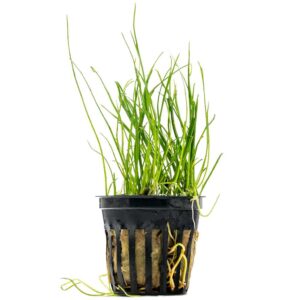
Guppies in general are one of the most hardy and therefore popular fish. Many beginners keep them with great success. Breeding is as easy as keeping some floating plants for babies to hide. Avoid other fish that would nip on their fins. | Eleocharis Acicularis
Characteristics:
Max Size: 3"
Care Level: Medium
Nutrient Source: Root Feeder
Composition: Carpet
Parameters
Co2: Grows best with Co2
Light Level: Medium to High
Tank Mates
Great carpet plant. Creates a lush looking lawn
Notes
Dwarf Hairgrass look like Microswords but are much more thin and fine in appearance. These can create a nice and compact grass appearance in any foreground. Without CO2, they will grow much slower and a little sparse. Strong lighting will help it densify and fine soil will prevent uprooting.
Compare carpet plant options and select the next one for your planted tank
See the diagrams on how you can setup CO2 for your aquarium | Carinotetraodon travancoricus
Characteristics:
Max Size: 1″
Care Level: Expert
Behavior: Aggressive
Dwelling: Middle of tank
Diet: Carnivore
Water Movement: Slow Moving
Parameters
Temperature: 74 – 82
PH: 7.2 - 7.5
dGH: 3 - 15
dKH: 3 - 10
Tank Size: 5 gal
Grouping: 1 or 6+
Tank Mates
Species Only tank recommended.
It's possible to keep with other fish and snails, but the setup has to be just right and you have to be lucky with a less aggressive puffer.
Notes
Aggressive and territorial. Provides lots of ground cover and space when having multiple puffers in one tank. Try to have 1 male for every 2-3 females to avoid fighting. The larger the tank the better, especially a wide tank with dense planting and lots space to shelter. Provide a minimum of 5 gallons for 1 puffer, add 3 more gallons for each additional puffer. |