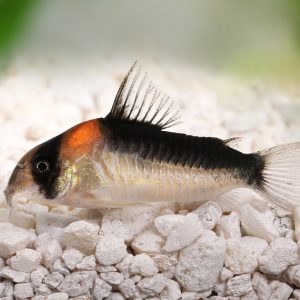
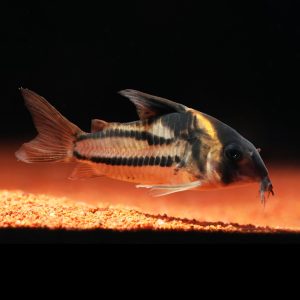
| Content | Hypostomus plecostomus
Characteristics:
Max Size: 18″
Care Level: Advance
Behavior: Peaceful
Dwelling: Bottom of tank
Diet: Omnivore
Water Movement: Medium Flow
Parameters
Temperature: 72 - 86
PH: 6.5 - 7.5
dGH: 2 - 10
dKH: 6 - 10
Tank Size: 100+ gal
Grouping: Single
Tank Mates
Common Plecos do well with many mid or top-dwelling community fish like Tetras, Rasboras, Danios, Hatchetfish, Mollies and Endlers. Once they get larger, they can live with Oscars, Angelfish, and some cichlids. They're peaceful with other bottom dwellers too, like Corydoras, but make sure there's ample room to spread out in the tank. Due to their size and territorial nature, it's not recommended to keep more than 1 Common Pleco per tank.
Notes
Common Pleco or Plecostomus are not hard to keep. They're noted as advanced level fish due to the fact that they can get extremely large and need a tank that's 100 plus gallons. Not only is the volume of water important, but they need a wide and deep tank (front & back) to have ample room to swim. They have the ability to adapt and thrive, so they should never be released into the wild as they can become an invasive species.
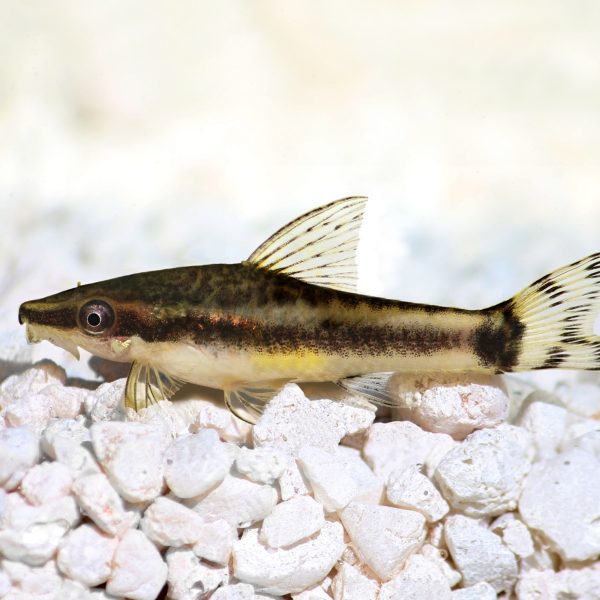
Plecos are nocturnal and prefer warmer waters. Provide a lot of hiding spaces including plants and caves. Although they're algae eaters, their diet cannot solely consist of algae. Supplement with wafers and other nutritious food, especially when they get older and larger. | Otocinclus macrospilus
Characteristics
Max Size: 2″
Care Level: Beginner
Behavior: Peaceful
Dwelling: Bottom of tank
Diet: Herbivore
Water Movement: Slow Moving
Parameters
Temperature: 72 – 82
PH: 6 – 7.5
dGH: 6 - 15
dKH: 4 – 10
Tank Size: 10 gal
Grouping: 6
Tank Mates
Cardina and Neocardina Shrimp, Cardinal and Neon Tetras, Zebra Danios, Hatchetfish, Mollies, Dwarf Gourami, Angelfish and Guppies, Zebra Loaches, Yoyo Loaches
Notes
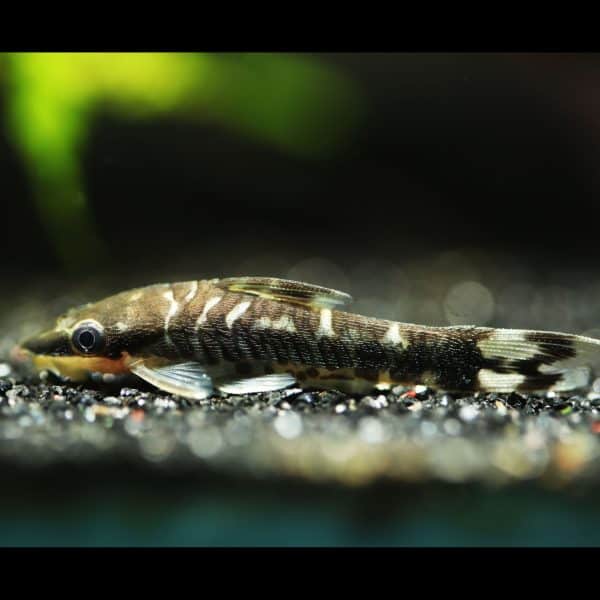
Otocinclus are very hardy and one of the most peaceful nano catfish you'll ever find. They're true herbivores and wont eat baby shrimp fry. They're also a shoaling fish, so when kept in larger groups they'll swim around together from one feeding point to another. | Otocinclus cocama
Characteristics
Max Size: 2″
Care Level: Beginner
Behavior: Peaceful
Dwelling: Bottom of tank
Diet: Herbivore
Water Movement: Slow Moving
Parameters
Temperature: 72 – 82
PH: 6 – 7.5
dGH: 6 - 15
dKH: 4 – 10
Tank Size: 10 gal
Grouping: 6
Tank Mates
Cardina and Neocardina Shrimp, Cardinal and Neon Tetras, Zebra Danios, Hatchetfish, Mollies, Dwarf Gourami, Angelfish and Guppies, Zebra Loaches, Yoyo Loaches
Notes
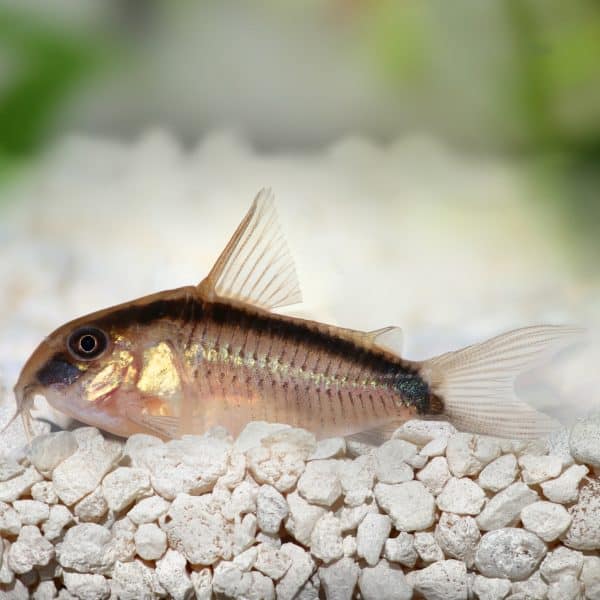
Otocinclus are very hardy and one of the most peaceful nano catfish you'll ever find. They're true herbivores and wont eat baby shrimp fry. They're also a shoaling fish, so when kept in larger groups they'll swim around together from one feeding point to another. | Corydoras duplicareus
Characteristics:
Max Size: 2″
Care Level: Easy
Behavior: Peaceful
Dwelling: Bottom of tank
Diet: Omnivore
Water Movement: Slow Moving
Parameters
Temperature: 72 – 78
PH: 6.5 – 7.3
dGH: 4 - 12
dKH: 3 – 7
Tank Size: 20 gal
Grouping: 6 or more
Tank Mates
Dwarf Corydoras are great tank mates with most shrimp species.
They're also great with Tetras, Rasboras, Danios, Hatchetfish, Mollies, Dwarf Gourami, Angelfish, Guppies, Loaches and Otocinclus
Notes
Smooth sand or gravel substrate preferred. They're not solely algae eaters, so provide wafers and other foods as well. Careful with aggressive fish eaters as they may not get enough nutrition at the bottom of tank. | Corydoras arcuatus
Characteristics:
Max Size: 2.5″
Care Level: Easy
Behavior: Peaceful
Dwelling: Bottom of tank
Diet: Omnivore
Water Movement: Slow Moving
Parameters
Temperature: 72 – 78
PH: 6.5 – 7.3
dGH: 4 - 12
dKH: 3 – 7
Tank Size: 20 gal
Grouping: 6 or more
Tank Mates
Dwarf Corydoras are great tank mates with most shrimp species.
They're also great with Tetras, Rasboras, Danios, Hatchetfish, Mollies, Dwarf Gourami, Angelfish, Guppies, Loaches and Otocinclus
Notes
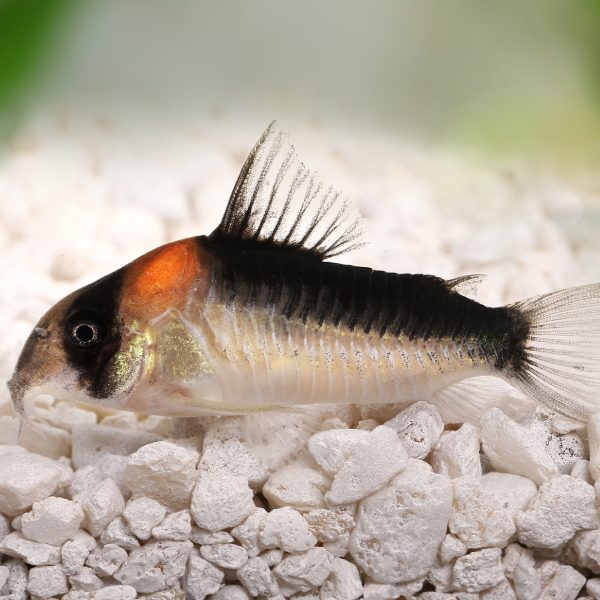
Smooth sand or gravel substrate preferred. They're not solely algae eaters, so provide wafers and other foods as well. Careful with aggressive fish eaters as they may not get enough nutrition at the bottom of tank. | Corydoras trilineatus
Characteristics:
Max Size: 2.5″
Care Level: Easy
Behavior: Peaceful
Dwelling: Bottom of tank
Diet: Omnivore
Water Movement: Slow Moving
Parameters
Temperature: 72 – 78
PH: 6.5 – 7.3
dGH: 4 - 12
dKH: 3 – 7
Tank Size: 20 gal
Grouping: 6 or more
Tank Mates
Dwarf Corydoras are great tank mates with most shrimp species.
They're also great with Tetras, Rasboras, Danios, Hatchetfish, Mollies, Dwarf Gourami, Angelfish, Guppies, Loaches and Otocinclus
Notes
Leopard Corydoras are often confused with Julii Corydoras. The difference is that Julii will have spots on the front part of their head, while Leopard will continue the same body pattern.
Smooth sand or gravel substrate preferred. They're not solely algae eaters, so provide wafers and other foods as well. Careful with aggressive fish eaters as they may not get enough nutrition at the bottom of tank. |