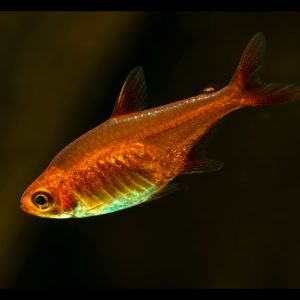
| Content | Haludaria fasciata
Characteristics:
Max Size: 2.5″
Care Level: Easy
Behavior: Peaceful
Dwelling: Middle of tank
Diet: Omnivore
Water Movement: Slow Moving
Parameters
Temperature: 72 – 82
PH: 6 – 8
dGH: 3 - 10
dKH: 4 – 7
Tank Size: 20 gal
Grouping: 6 or more
Tank Mates
Tetras, Rasboras, Danios, Hatchetfish, Platies, Loaches, Otocinclus and snails. Avoid fish with long fins like bettas and guppies.
Notes
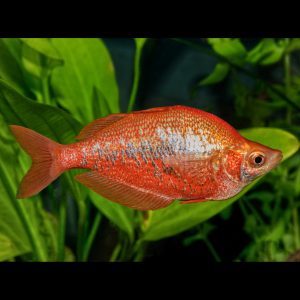
Melon Barbs are actually peaceful compare to other barb species. They grow up to 3" in size and are great tank mates with general nano community fish. They're active shoaling fish, so provide plenty of space to swim | Melanotaenia boesemani
Characteristics:
Max Size: 4″
Care Level: Intermediate
Behavior: Peaceful
Dwelling: Middle of tank
Diet: Omnivore
Water Movement: Slow Moving
Parameters
Temperature: 75° – 82°
PH: 7 – 8
dGH: 8 – 20
dKH: 3 – 7
Tank Size: 30 gal
Grouping: 6
Tank Mates
Cherry Barbs, Tetras, Rasboras, Danios, Dwarf Gouramis, Hatchetfish, Mollies, Guppies, Plecos, Dwarf Corydoras, Loaches, Otocinclus and even Dwarf Shrimp.
Notes
Although larger in size, Boesemani Rainbowfish are peaceful middle dwellers with small mouths. They do well in a community with many nano fish including cherry barbs. Minimize plant and decoration density and aim for 48" long tank to give them ample swimming space. | Aphyocharax anisitsi
Characteristics:
Max Size: 2″
Care Level: Easy
Behavior: Peaceful
Dwelling: Middle of tank
Diet: Omnivore
Water Movement: Slow Moving
Parameters
Temperature: 68° – 75°
PH: 6 – 7.2
dGH: 4 – 8
dKH: 3 – 7
Tank Size: 10 gal
Grouping: 6 or more
Tank Mates
Cardina and Neocaridina shrimp, Tetras, Rasboras, Danios, Hatchetfish, Mollies, Dwarf Gourami, Angelfish, Guppies, Loaches, Otocinclus, dwarf shrimp and snails
Notes
Bloodfin tetras can be both subtle and vibrant. Their silver bodies and red highlights make them great community fish. General rule is 2 gallons per fish. Provide a minimum of 10 gallons, but aim for 20 to provide extra room to swim. Avoid aggressive or territorial species or large fish with big mouths such as cichlids. | Paracheirodon innesi
Characteristics:
Max Size: 1.25″
Care Level: Easy
Behavior: Peaceful
Dwelling: Middle of tank
Diet: Omnivore
Water Movement: Slow Moving
Parameters
Temperature: 68° – 75°
PH: 6 – 7.2
dGH: 4 – 8
dKH: 3 – 7
Tank Size: 10 gal
Grouping: 6 or more
Tank Mates
Tetras, Rasboras, Danios, Hatchetfish, Mollies, Dwarf Gourami, Angelfish, Guppies, Loaches, Otocinclus, dwarf shrimp and snails
Notes
Gold Neon Tetras are a cousin to Neon Tetras and are also great beginner fish. They can tolerate both acidic and low alkaline water conditions. General rule is 2 gallons per fish. 10 Gallon tank at a minimum, but push for 20 or more for healthy and happy fish. Avoid aggressive or territorial species or large fish with big mouths such as cichlids.
Learn the difference between Cardinal vs. Neon Tetras | Nematobrycon palmeri var. amphiloxus black
Characteristics:
Max Size: 2″
Care Level: Easy
Behavior: Peaceful
Dwelling: Middle of tank
Diet: Omnivore
Water Movement: Slow Moving
Parameters
Temperature: 73° – 81°
PH: 6.2 – 7.5
dGH: 3 – 6
dKH: 2 – 6
Tank Size: 10 gal
Grouping: 6 or more
Tank Mates
Tetras, Rasboras, Danios, Hatchetfish, Mollies, Dwarf Gourami, Angelfish, Guppies, Loaches, Otcinclus, dwarf shrimp and snails
Care
Black Emperor Tetras are relatively hardy fish. Keep in large groups to minimize male aggression. They’re able to reach 2” in size, males having blue eyes and females green. General rule is 2 gallons per fish. 10 Gallon tank at a minimum, but push for 20 or more for healthy and happy fish. Avoid aggressive or territorial species or large fish with big mouths. | Hyphessobrycon pulchripinnis
Characteristics:
Max Size: 2″
Care Level: Easy
Behavior: Peaceful
Dwelling: Middle of tank
Diet: Omnivore
Water Movement: Slow Moving
Parameters
Temperature: 68° – 75°
PH: 6 – 7.5
dGH: 4 – 8
dKH: 3 – 7
Tank Size: 20 gal
Grouping: 6 or more
Tank Mates
Tetras, Rasboras, Danios, Hatchetfish, Mollies, Dwarf Gourami, Angelfish, Guppies, Loaches, Otocinclus, dwarf shrimp and snails
Notes
Lemon Tetras have vibrant fins and a more flat, diamond shaped body. They're very active swimmers, so a 20 gallon tank would be ideal for a group of 6 or more. Avoid aggressive or territorial species or large fish with big mouths. |