| Content | Tuberoschistura arakanensis
Characteristics:
Max Size: 1.25″
Care Level: Easy
Behavior: Peaceful
Dwelling: Bottom of tank
Diet: Omnivore
Water Movement: Slow Moving
Parameters
Temperature: 74 – 82
PH: 6.5 - 7.8
dGH: 8 - 12
dKH: 4 - 8
Tank Size: 30 gal
Grouping: 8-10
Tank Mates
Neocaridina Shrimp, Amano Shrimp, Neon Tetras, Rasboras, Danios, Guppies and Otocinclus
Notes
Rosy loaches are one of the few nano size members in the loach family. They're active bottom feeders but are generally peaceful with the community. They can eat small snails and baby shrimp, but most adult shrimps are too big for their mouths and generally safe.
https://plantedtankmates.com/shrimp-tank-mates/
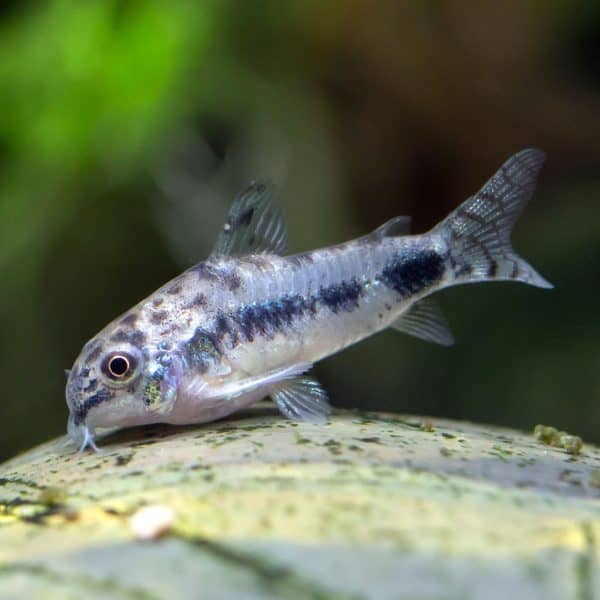
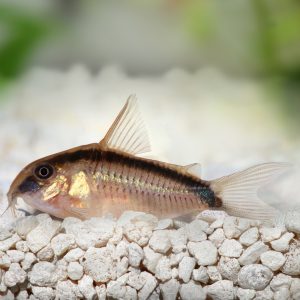
| Corydoras habrosus
Characteristics:
Max Size: 1 1/2″
Care Level: Easy
Behavior: Peaceful
Dwelling: Bottom of tank
Diet: Omnivore
Water Movement: Slow Moving
Parameters
Temperature: 72 – 78
PH: 6.5 – 7.3
dGH: 4 - 12
dKH: 3 – 7
Tank Size: 20 gal
Grouping: 6 or more
Tank Mates
Dwarf Corydoras are great tank mates with most shrimp species!
They're also great with Tetras, Rasboras, Danios, Hatchetfish, Mollies, Dwarf Gourami, Angelfish, Guppies, Loaches and Otocinclus
Notes
Smooth sand or gravel substrate preferred. They're not solely algae eaters, so provide wafers and other foods as well. Careful with aggressive fish eaters as they may not get enough nutrition at the bottom of tank. | Otocinclus macrospilus
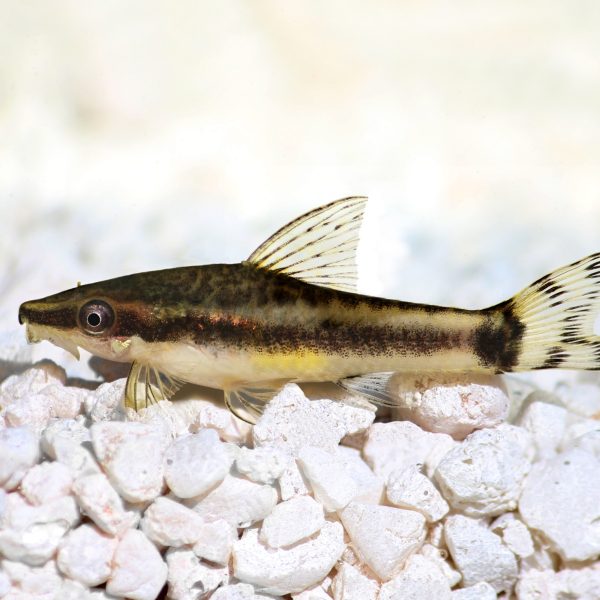
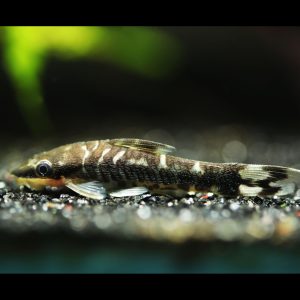
Characteristics
Max Size: 2″
Care Level: Beginner
Behavior: Peaceful
Dwelling: Bottom of tank
Diet: Herbivore
Water Movement: Slow Moving
Parameters
Temperature: 72 – 82
PH: 6 – 7.5
dGH: 6 - 15
dKH: 4 – 10
Tank Size: 10 gal
Grouping: 6
Tank Mates
Cardina and Neocardina Shrimp, Cardinal and Neon Tetras, Zebra Danios, Hatchetfish, Mollies, Dwarf Gourami, Angelfish and Guppies, Zebra Loaches, Yoyo Loaches
Notes
Otocinclus are very hardy and one of the most peaceful nano catfish you'll ever find. They're true herbivores and wont eat baby shrimp fry. They're also a shoaling fish, so when kept in larger groups they'll swim around together from one feeding point to another. | Corydoras pygmaeus
Characteristics:
Max Size: 1″
Care Level: Easy
Behavior: Peaceful
Dwelling: Bottom of tank
Diet: Omnivore
Water Movement: Slow Moving
Parameters
Temperature: 72 – 78
PH: 6.5 – 7.3
dGH: 4 - 12
dKH: 3 – 7
Tank Size: 10 gal
Grouping: 4 or more
Tank Mates
Dwarf Corydoras are great tank mates with most shrimp species!
They're also great with Tetras, Rasboras, Danios, Hatchetfish, Mollies, Dwarf Gourami, Angelfish, Guppies, Loaches and Otocinclus
Notes
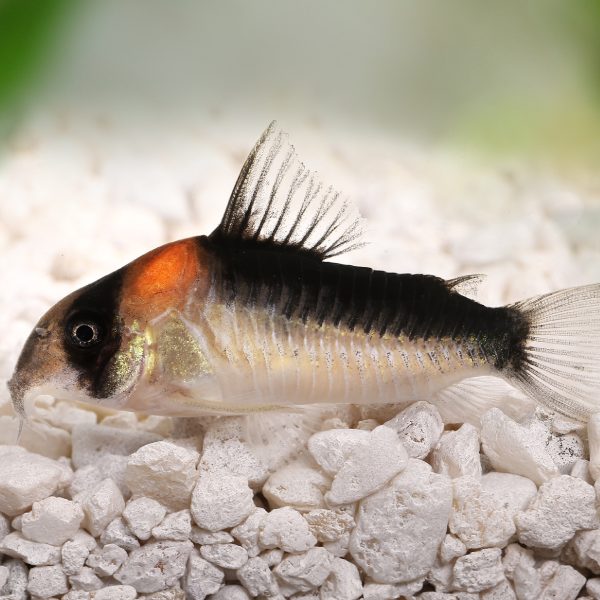
Smooth sand or gravel substrate preferred. They're not solely algae eaters, so provide wafers and other foods as well. Careful with aggressive fish eaters as they may not get enough nutrition at the bottom of tank. | Corydoras duplicareus
Characteristics:
Max Size: 2″
Care Level: Easy
Behavior: Peaceful
Dwelling: Bottom of tank
Diet: Omnivore
Water Movement: Slow Moving
Parameters
Temperature: 72 – 78
PH: 6.5 – 7.3
dGH: 4 - 12
dKH: 3 – 7
Tank Size: 20 gal
Grouping: 6 or more
Tank Mates
Dwarf Corydoras are great tank mates with most shrimp species.
They're also great with Tetras, Rasboras, Danios, Hatchetfish, Mollies, Dwarf Gourami, Angelfish, Guppies, Loaches and Otocinclus
Notes
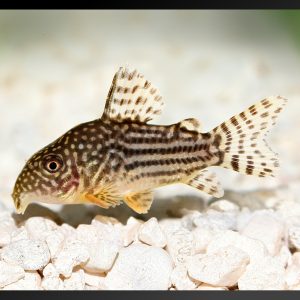
Smooth sand or gravel substrate preferred. They're not solely algae eaters, so provide wafers and other foods as well. Careful with aggressive fish eaters as they may not get enough nutrition at the bottom of tank. | Corydoras julii
Characteristics:
Max Size: 2 1/2″
Care Level: Easy
Behavior: Peaceful
Dwelling: Bottom of tank
Diet: Omnivore
Water Movement: Slow Moving
Parameters
Temperature: 72 – 78
PH: 6.5 – 7.3
dGH: 4 - 12
dKH: 3 – 7
Tank Size: 20 gal
Grouping: 6 or more
Tank Mates
Dwarf Corydoras are great tank mates with most shrimp species!
They're also great with Tetras, Rasboras, Danios, Hatchetfish, Mollies, Dwarf Gourami, Angelfish, Guppies, Loaches and Otocinclus
Notes
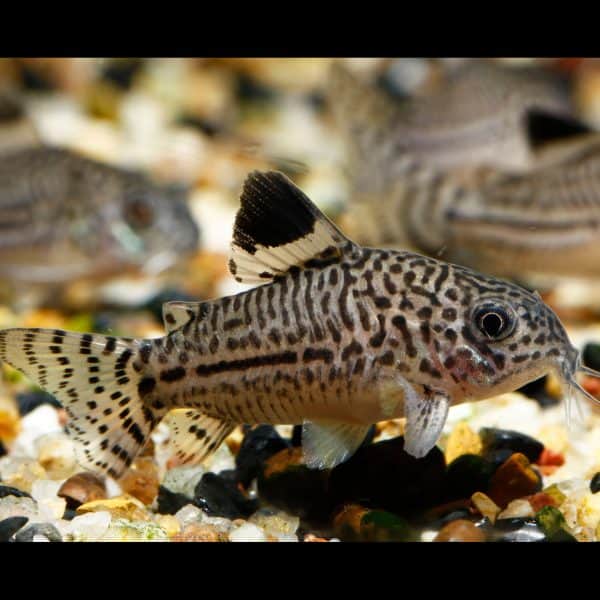
Julii Corydora are often confused with Leopard Corydoras. The difference is that Julii will have spots on the front part of their head, while Leopard will continue the same body pattern.
Provide Smooth sand or gravel substrate preferred. They're not solely algae eaters, so provide wafers and other foods as well. Careful with aggressive fish eaters as they may not get enough nutrition at the bottom of tank. |