Overview
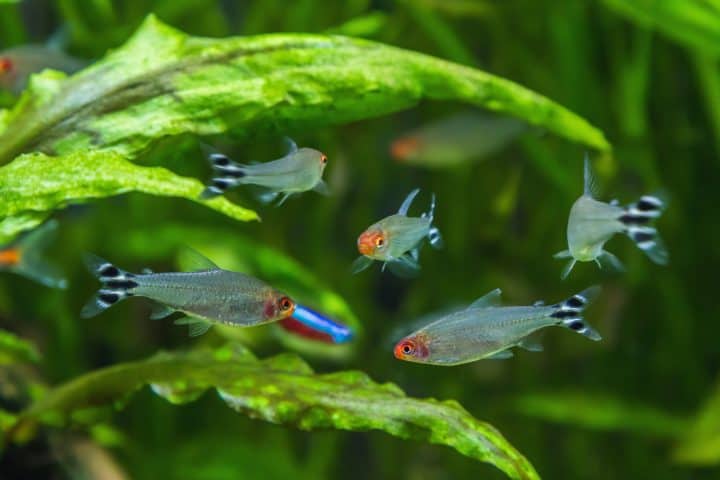
Most types of Rasboras make great community fish. They’re generally peaceful and pair well with other tetras, danios and even dwarf shrimp. Being small in size, they can be timid and shy, often hiding in plants and shady areas. When kept in large groups, they feel more comfortable and safe and will exhibit strong shoaling tendencies. It’s easy to select a species and give your planted tank a nice variety of color, pattern and activity.
Types of Rasboras
Tiny Rasboras 3/4” | 10 gallons
Chili Rasbora are also known as Mosquito Rasboras. They’re most frequently found in local fish stores and are hardy and easy to care for. Their vibrant red body with black spots make them stand out in any planted tank community. This is especially true when you keep them in large groups and have a white or black background . Keep them with Neon Tetras or Blue Dream shrimps for a contrast in color and variety.

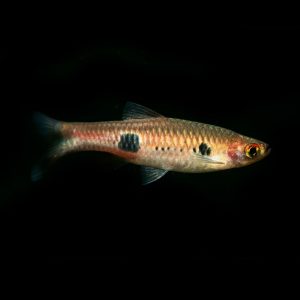
Galaxy Rasboras are also known as Celestial Pearl Danios. They entered the fishkeeping world in the early 2000’s and became famous for their spotted bodies and bright orange fins. What makes them great is that they’ve extremely easy to breed. Pairing a male and female in a breeding tank can result in fertilized eggs almost daily. You can read more about their easy breeding process here.

If your aquarium has a white background, a group of Kubotai Rasboras will definitely stand out. Their natural, highlighter yellow / green bodies are an eye catcher and it’s easy to spot from a distance. Be sure to keep them in large groups for a shoaling effect. While they generally come from acidic water conditions, they’re hardy and can tolerate some mild alkalinity. Just be sure to keep the water parameters stable.

Small Rasboras 1-2” | 10-20 gallon
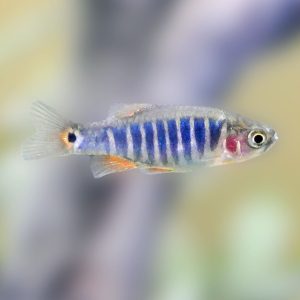
Emerald Dwarf Rasboras pack a punch with their vertical blue stripes and red-orange fins. They can get up to 1.5” in size and are a great contrast with more solid color fish like Ember Tetras. Unlike most rasboras that prefer softer, acidic water parameters, Emerald Dwarf Rasboras require alkaline water conditions. You can keep them with dwarf shrimp, but be sure it’s Neocaridina Shrimp that can tolerate the higher PH.
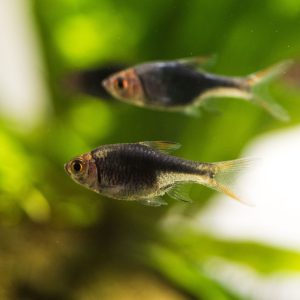
Harlequin Rasbora are another popular species that can be found in most local fish stores. They’re also known as “Pork Chop” rasboras due to the black pattern on their body shaped like a sliced pork cut. They’re relatively hardy fish and versatile with most community fish. Their group size can be smaller as they get up to 2” in size, like most nano fish they’re more comfortable in higher numbers.

Black Harlequin Rasbora are a cousin to Harlequin Rasboras. Their black pork chop pattern actually extends towards their head, covering most of the body. The body is a duller orange color and under certain lighting conditions, the black can look a bit purple. These middle to top dwellers are a great contrast with bottom dwelling fish like corydoras and otocinclus.
Medium Rasboras 3-5” | 30-40 gallon plus
Clown Rasboras can easily get mistaken for Dwarf Rasboras, especially when they’re juveniles. Be careful with Clown Rasboras though because they can actually get up to 4” in size like a Siamese Algae Eater. While you can start them in a smaller 20 gallon tank, they prefer to be kept in groups and will require a 40 gallon tank or larger. Aim for a wider tank rather than tall so there’s ample room to swim back and forth. See this blog article for a graphical comparison of tank sizes.
Scissortail Rasbora have a split tail with black and white pattern. At first glance, it reminds you of a Rummy Nose Tetra with its unique tail stripes. Unlike a Rummy Nose Tetra, a Scissortail Rasbora can get up to 5” in size. This is another rasbora species that absolutely requires a larger tank. Dwarf shrimps may or may not be safe with these larger fish, depending on the setup and density of plants.

Bonus
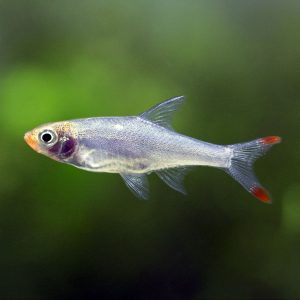
Rummy Nose Rasboras are also known as Asian Rummy Nose Tetras or Sawbwa Barbs. Similar to how Galaxy Rasboras and Blue Axelrodi are more related to danios, Rummy Nose Rasboras are actually more related to barb fishes. Their shape and size though is uncanny to a rasbora or tetra, as well as their general water requirements. With an orange nose, purple cheek and red-tipped tail, they’re a great addition to any community tank.
All Things Considered
Many types of rasboras can be kept in small tanks. While you can keep them in a 5 gallon aquarium, you want to provide more than the bare minimum living condition. To see them thrive, aim for a 10 gallon tank or larger. Provide tall stem plants or tie mosses to branches and create some relief area in the habitat. To amplify their shoaling tendencies, try including a larger showcase fish like a single Dwarf Gourami. A larger yet peaceful species will group rasboras tighter and swim together. Their variety of colors, patterns and peaceful nature will make them a great addition to any planted tank.