| Content | Chromobotia macracanthus
Characteristics:
Max Size: 12″
Care Level: Intermediate
Behavior: Peaceful
Dwelling: Bottom of tank
Diet: Omnivore
Water Movement: Slow Moving
Parameters
Temperature: 78° – 86°
PH: 6.5 – 7.5
dGH: 5 – 12
dKH: 2 – 8
Tank Size: 75 gal
Grouping: 5 or more
Tank Mates
Nano community fish like tetras, rasboras danios and gouramis. Larger mid-dwelling fish like tiger barbs, rainbowfish and non aggressive cichlids like German Blue Rams and apistogramma are also good tank mates. Clown loaches also do well with other peaceful loaches like Kuhli and Yoyo loaches. They're compatible with non territorial bottom feeders like Bristlenose plecos and corydoras. Even large arowanas can be good tank mates for Clown loaches. Avoid dwarf shrimps and snails which can be come expensive snacks.
Notes
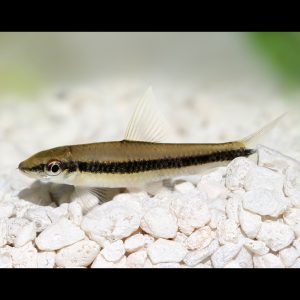
Clown loaches are very active when kept in larger groups. They can be playful in nature, but exhibit this behavior when kept in groups of 6 or more. Avoid bright lights and provide lots of shaded areas. They're most active in the early morning and late evenings when lighting is more subdued. They prefer soft, sandy substrates to dig through. Clown loaches are sensitive to poor water quality, so maintain high water quality by doing regular partial water changes. When they get larger, it's recommended to provide a larger tank, possibly 150 gallons or more. | Otocinclus vittatus
Characteristics
Max Size: 2″
Care Level: Beginner
Behavior: Peaceful
Dwelling: Bottom of tank
Diet: Herbivore
Water Movement: Slow Moving
Parameters
Temperature: 72 – 82
PH: 6 – 7.5
dGH: 6 - 15
dKH: 4 – 10
Tank Size: 10 gal
Grouping: 6
Tank Mates
Cardina and Neocardina Shrimp, Cardinal and Neon Tetras, Zebra Danios, Hatchetfish, Mollies, Dwarf Gourami, Angelfish and Guppies, Zebra Loaches, Yoyo Loaches
Notes
Otocinclus are very hardy and one of the most peaceful nano catfish you'll ever find. They're true herbivores and won't eat baby shrimp fry. They're also a shoaling fish, so when kept in larger groups they'll swim around together from one feeding point to another. | Corydoras eques
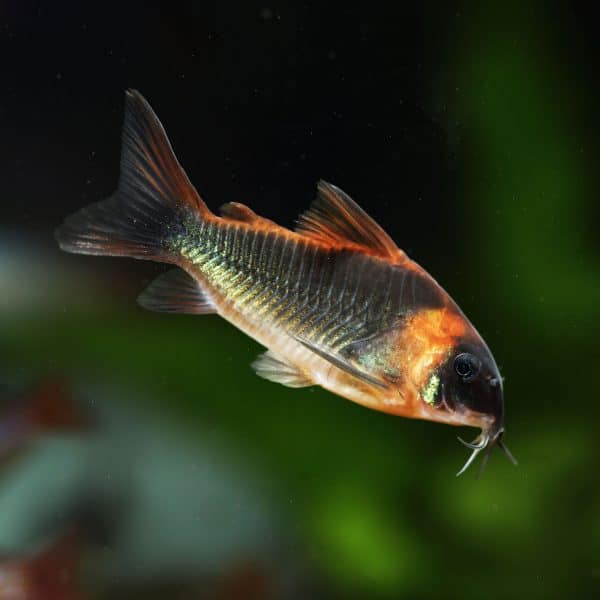
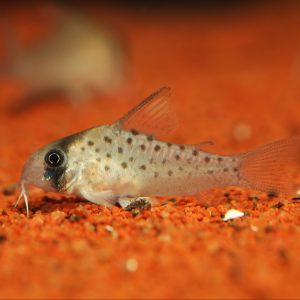
Characteristics:
Max Size: 2 1/2″
Care Level: Easy
Behavior: Peaceful
Dwelling: Bottom of tank
Diet: Omnivore
Water Movement: Slow Moving
Parameters
Temperature: 72 – 78
PH: 6.5 – 7.3
dGH: 4 - 12
dKH: 3 – 7
Tank Size: 20 gal
Grouping: 6 or more
Tank Mates
Dwarf Corydoras are great tank mates with most shrimp species!
They're also great with Tetras, Rasboras, Danios, Hatchetfish, Mollies, Dwarf Gourami, Angelfish, Guppies, Loaches and Otocinclus
Notes
Smooth sand or gravel substrate preferred. They're not solely algae eaters, so provide wafers and other foods as well. Careful with aggressive fish eaters as they may not get enough nutrition at the bottom of tank. | Corydoras panda
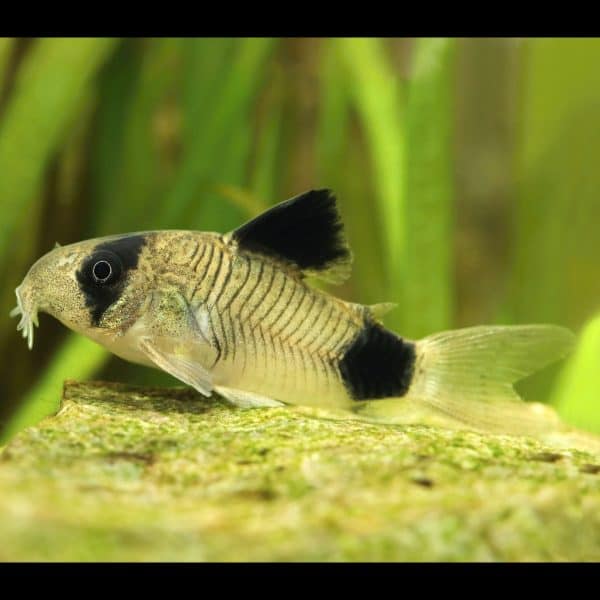
Characteristics:
Max Size: 2″
Care Level: Easy
Behavior: Peaceful
Dwelling: Bottom of tank
Diet: Omnivore
Water Movement: Slow Moving
Parameters
Temperature: 72 – 78
PH: 6.5 – 7.3
dGH: 4 - 12
dKH: 3 – 7
Tank Size: 20 gal
Grouping: 6 or more
Tank Mates
Dwarf Corydoras are great tank mates with most shrimp species!
They're also great with Tetras, Rasboras, Danios, Hatchetfish, Mollies, Dwarf Gourami, Angelfish, Guppies, Loaches and Otocinclus
Notes
Smooth sand or gravel substrate preferred. They're not solely algae eaters, so provide wafers and other foods as well. Careful with aggressive fish eaters as they may not get enough nutrition at the bottom of tank. | Otocinclus vestitus
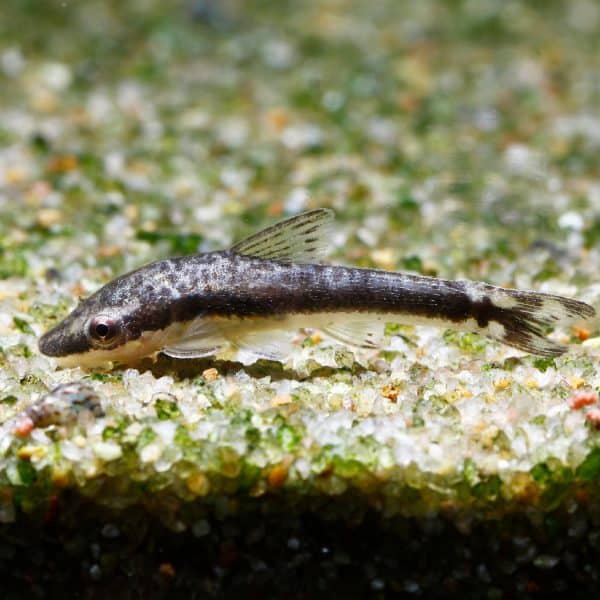
Characteristics
Max Size: 2″
Care Level: Beginner
Behavior: Peaceful
Dwelling: Bottom of tank
Diet: Herbivore
Water Movement: Slow Moving
Parameters
Temperature: 72 – 82
PH: 6 – 7.5
dGH: 6 - 15
dKH: 4 – 10
Tank Size: 10 gal
Grouping: 6
Tank Mates
Cardina and Neocardina Shrimp, Cardinal and Neon Tetras, Zebra Danios, Hatchetfish, Mollies, Dwarf Gourami, Angelfish and Guppies, Zebra Loaches, Yoyo Loaches
Notes
Otocinclus are very hardy and one of the most peaceful nano catfish you'll ever find. They're true herbivores and wont eat baby shrimp fry. They're also a shoaling fish, so when kept in larger groups they'll swim around together from one feeding point to another. | Corydoras trilineatus
Characteristics:
Max Size: 2.5″
Care Level: Easy
Behavior: Peaceful
Dwelling: Bottom of tank
Diet: Omnivore
Water Movement: Slow Moving
Parameters
Temperature: 72 – 78
PH: 6.5 – 7.3
dGH: 4 - 12
dKH: 3 – 7
Tank Size: 20 gal
Grouping: 6 or more
Tank Mates
Dwarf Corydoras are great tank mates with most shrimp species.
They're also great with Tetras, Rasboras, Danios, Hatchetfish, Mollies, Dwarf Gourami, Angelfish, Guppies, Loaches and Otocinclus
Notes
Leopard Corydoras are often confused with Julii Corydoras. The difference is that Julii will have spots on the front part of their head, while Leopard will continue the same body pattern.
Smooth sand or gravel substrate preferred. They're not solely algae eaters, so provide wafers and other foods as well. Careful with aggressive fish eaters as they may not get enough nutrition at the bottom of tank. |