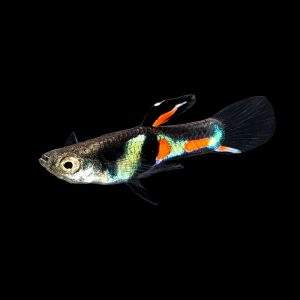
| Content | Osphronemus goramy
Characteristics:
Max Size: 18″
Care Level: Intermediate
Behavior: Aggressive
Dwelling: Middle to Top of tank
Diet: Omnivore
Water Movement: Slow Moving
Parameters
Temperature: 68 – 86
PH: 6.5 - 8
dGH: 5 - 25
dKH: 4 – 12
Tank Size: 200 gal
Grouping: 1
Tank Mates
Smaller fish including frogs will get eaten. Plants may get nibbled on, although they love a heavy planted tank with tall vegetation.
Larger fish of equal or smaller size such as parrot fish, oscars, arowanas or large plecos or catfish will do well.
Notes
Giant Gouramis are loners and do better without other gouramis in the tank. Males will fight and it's best to avoid having more than 1 in a tank. Dim lighting and tall vegetation will help keep them relaxed and comfortable. | Trichopodus trichopterus var. Opaline
Characteristics:
Max Size: 6″
Care Level: Intermediate
Behavior: Peaceful
Dwelling: Middle to Top of tank
Diet: Omnivore
Water Movement: Slow Moving
Parameters
Temperature: 72 – 82
PH: 6 - 7.5
dGH: 4 - 15
dKH: 3 – 8
Tank Size: 30 gal
Grouping: 1, or 6+
Tank Mates
Larger nano community fish like large tetras, rasboras, peaceful barbs, Tinfoil Barbs that dwell at the middle of the tank
Slightly smaller or equal in size fish such as dwarf cichlids, German Blue Rams, Apistogramma
Larger bottom feeders like loaches, corydoras, Siamese Algae Eaters
Avoid fin nipping fish
Notes
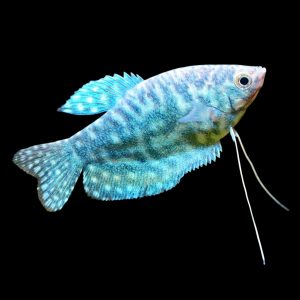
Opaline Gouramis are recognized by their pale blue color and dark grey/black marbled body patterns. They're a color variation from the same Trichopodus trichopterus species as the Three-Spot Gourami, Blue Gourami, Gold Gourami and Lavendar Gourami.
Keep as a single feature fish, or as a male & female pair. They're generally peaceful community fish but can become semi-aggressive towards each other, especially males. When in groups, keep 1 male to every 2-3 female ratio. | Trichogaster chuna
Characteristics:
Max Size: 2.5″
Care Level: Easy
Behavior: Peaceful
Dwelling: Middle to Top of tank
Diet: Omnivore
Water Movement: Slow Moving
Parameters
Temperature: 72 – 82
PH: 6 - 7.5
dGH: 4 - 15
dKH: 3 – 8
Tank Size: 10 gal
Grouping: 1, or 6+
Tank Mates
Most nano community fish like Tetras, Rasboras, Danios, Hatchetfish, Mollies, Guppies
Bottom feeders like loaches, corydoras, otocinclus, snails. Adult shrimp OK, but smaller shrimp or fry can become snacks.
Notes
Keep as a single feature fish, or as a male & female pair. They're generally peaceful community fish but can become semi-aggressive towards each other, especially males. When in groups, keep 1 male to every 2-3 female ratio. | Betta spenden
Characteristics:
Max Size: 3″
Care Level: Easy
Behavior: Aggressive
Dwelling: Top of tank
Diet: Omnivore
Water Movement: Slow Moving
Parameters
Temperature: 76 – 82
PH: 6.5 - 7.5
dGH: 2 - 5
dKH: 1 – 4
Tank Size: 5 gal
Grouping: Single
Tank Mates
Peaceful mid-dwelling nano fish like ember tetras, harlequin rasboras, and celestial pearl danios, but keep them in strong groups
Bottom dwellers like Kuhli loaches, Corydoras, Malaysian Trumpet snails. Depending on each individual betta, dwarf shrimp may or may not get eaten.
Avoid other aggressive, fin-nipping or even colorful fish like tiger barbs and fancy guppies.
Prevent stressing the betta by keeping top dwelling fish to a minimum.
Avoid larger fish which can prey or intimidate like cichlids.
Notes
Double Tail Bettas actually have 2 distinct tail lobes instead of 1. Their tail symmetrically splits and their anal fin runs the full length of their body.
Betta fish are also known as Siamese or Japanese Fighting Fish. They're very territorial and should never be kept together unless for short-term breeding. Despite their aggressive nature, they can have a curious and playful personality. They'll often recognize their caretaker and will even come up to the glass to greet them. The betta spenden species come in a variety of tail shapes, colors and patterns. They're easily the show piece to any tank and their extravagant tails flow like living art. Provide their space with a lot of plants, slow water agitation and warm waters to keep them healthy and active.
Regardless of what you see in retail stores or what people say, NEVER keep a betta in anything less than a 5 gallon tank.
https://plantedtankmates.com/types-of-betta-fish/ | Trichogaster colisa
Characteristics:
Max Size: 2.5″
Care Level: Easy
Behavior: Peaceful
Dwelling: Middle to Top of tank
Diet: Omnivore
Water Movement: Slow Moving
Parameters
Temperature: 72 – 82
PH: 6 - 7.5
dGH: 4 - 15
dKH: 3 – 8
Tank Size: 10 gal
Grouping: 1, or 6+
Tank Mates
Most nano community fish like Tetras, Rasboras, Danios, Hatchetfish, Mollies, Guppies
Bottom feeders like loaches, corydoras, otocinclus, snails. Adult shrimp OK, but smaller shrimp or fry can become snacks.
Notes
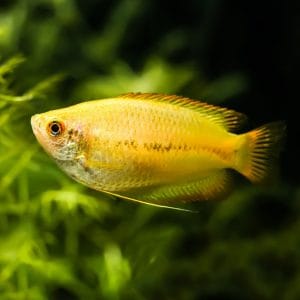
Red Honey Gouramis are a color variation of the Honey Gourami. They can still have a yellow body with more Red hues which translates to their fins and tail.Keep as a single feature fish, or as a male & female pair.
They're generally peaceful community fish but can become semi-aggressive towards each other, especially males. When in groups, keep 1 male to every 2-3 female ratio. | Betta spenden
Characteristics:
Max Size: 3″
Care Level: Easy
Behavior: Aggressive
Dwelling: Top of tank
Diet: Omnivore
Water Movement: Slow Moving
Parameters
Temperature: 76 – 82
PH: 6.5 - 7.5
dGH: 2 - 5
dKH: 1 – 4
Tank Size: 5 gal
Grouping: Single
Tank Mates
Peaceful mid-dwelling nano fish like ember tetras, harlequin rasboras, and celestial pearl danios, but keep them in strong groups
Bottom dwellers like Kuhli loaches, Corydoras, Malaysian Trumpet snails. Depending on each individual betta, dwarf shrimp may or may not get eaten.
Avoid other aggressive, fin-nipping or even colorful fish like tiger barbs and fancy guppies.
Prevent stressing the betta by keeping top dwelling fish to a minimum.
Avoid larger fish which can prey or intimidate like cichlids.
Notes
Koi Bettas are a type of Marble Betta but with coloration and patterns resembling a Japanese Koi Fish. There is no cross-breeding with an actual Koi carp.
Betta fish are also known as Siamese or Japanese Fighting Fish. They're very territorial and should never be kept together unless for short-term breeding. Despite their aggressive nature, they can have a curious and playful personality. They'll often recognize their caretaker and will even come up to the glass to greet them. The betta spenden species come in a variety of tail shapes, colors and patterns. They're easily the show piece to any tank and their extravagant tails flow like living art. Provide their space with a lot of plants, slow water agitation and warm waters to keep them healthy and active.
Regardless of what you see in retail stores or what people say, NEVER keep a betta in anything less than a 5 gallon tank.
https://plantedtankmates.com/types-of-betta-fish/ |