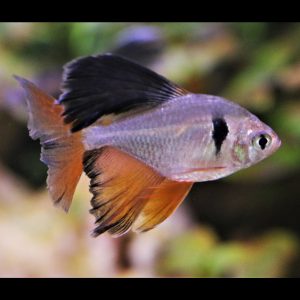
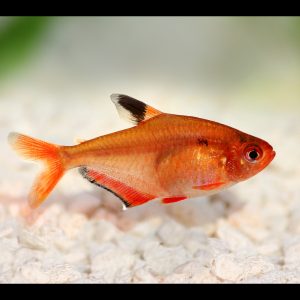
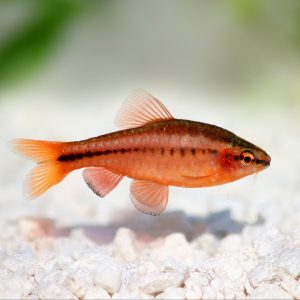
| Content | Hyphessobrycon sweglesi
Characteristics:
Max Size: 1.5″
Care Level: Easy
Behavior: Peaceful
Dwelling: Middle of Tank
Diet: Omnivore
Water Movement: Slow Moving
Parameters
Temperature: 68° – 75°
PH: 6 – 7.5
dGH: 4 – 8
dKH: 3 – 7
Tank Size: 10 gal
Grouping: 6 or more
Tank Mates
Tetras, Rasboras, Danios, Hatchetfish, Mollies, Dwarf Gourami, Angelfish, Guppies, Loaches, Otocinclus, dwarf shrimp and snails
Notes
Red Phantom Tetras can look very similar to their Serpae Tetra cousin. While both can have an orange body with black spot, Red Phantoms dorsal and anal fin tend to match the body color without any black or white tips. You can keep them in a 10 gallon tank, but push for a 20 gallon with larger groups. Avoid aggressive or territorial species or large fish with big mouths. | Hyphessobrycon eques
Characteristics:
Max Size: 2″
Care Level: Easy
Behavior: Peaceful
Dwelling: Middle of Tank
Diet: Omnivore
Water Movement: Slow Moving
Parameters
Temperature: 68° – 75°
PH: 6 – 7.5
dGH: 4 – 8
dKH: 3 – 7
Tank Size: 10 gal
Grouping: 6 or more
Tank Mates
Tetras, Rasboras, Danios, Hatchetfish, Mollies, Dwarf Gourami, Angelfish, Guppies, Loaches, Otocinclus, dwarf shrimp and snails
Notes
Serpae Tetras are also known as Red Minor Tetra, Jewel Tetra or Callistus Tetras, and are great beginner fish. They often have a black spot on their body and can get confused with Red Phantom Tetras. The Serpae Tetras dorsal and anal fin have red and transition to black with white tips. You can keep them in a 10 gallon tank, but push for a 20 gallon with larger groups. Avoid aggressive or territorial species or large fish with big mouths. | Trigonostigma heteromorpha
Characteristics:
Max Size: 1.5″
Care Level: Easy
Behavior: Peaceful
Dwelling: Middle of tank
Diet: Omnivore
Water Movement: Slow Moving
Parameters
Temperature: 72 – 82
PH: 6 - 7.2
dGH: 3 – 6
dKH: 4 – 8
Tank Size: 10 gal
Grouping: 6 or more
Tank Mates
Caridina and Neocaridina Shrimp, Tetras, Rasboras, Danios, Hatchetfish, Mollies, Dwarf Gourami, Angelfish, Guppies, Loaches and Otocinclus
Notes
Avoid aggressive or territorial species or large fish with big mouths. | Hemigrammus rhodostomus
Characteristics:
Max Size: 1.75″
Care Level: Intermediate
Behavior: Peaceful
Dwelling: Middle of tank
Diet: Omnivore
Water Movement: Slow Moving
Parameters
Temperature: 72 – 84
PH: 6 – 7
dGH: 3-6
dKH: 2 – 8
Tank Size: 10 gal
Grouping: 6 or more
Tank Mates
Neon Tetras, Zebra Danios, Hatchetfish, Mollies, Dwarf Gourami, Angelfish and Guppies, Zebra Loaches, Yoyo Loaches and Otocinclus:
Notes
Aggressive or territorial species or large fish with big mouths such as cichlids. | Aphyocharax anisitsi
Characteristics:
Max Size: 2.5″
Care Level: Intermediate
Behavior: Peaceful
Dwelling: Middle of tank
Diet: Omnivore
Water Movement: Slow Moving
Parameters
Temperature: 78° – 85°
PH: 6.5 – 7.5
dGH: 6 – 14
dKH: 3 – 7
Tank Size: 20 gal
Grouping: Single
Tank Mates
Most nano fish and peaceful dwarf cichlids including but not limited to: Cherry Barbs, Tetras, Rasboras, Danios, Hatchetfish, Mollies, Dwarf Gourami, Guppies, Plecos, Dwarf Corydoras, Loaches, Otocinclus
Notes
German Blue Rams are popular for their super vibrant colors. They're a smaller and peaceful cichlid, but require tight water parameters and need a lot of space when housing more than one. | Paracheirodon innes
Characteristics:
Max Size: 1.25″
Care Level: Easy
Behavior: Peaceful
Dwelling: Middle of tank
Diet: Omnivore
Water Movement: Slow Moving
Parameters
Temperature: 68° – 75°
PH: 6 – 7.2
dGH: 4 – 8
dKH: 3 – 7
Tank Size: 10 gal
Grouping: 6 or more
Tank Mates
Tetras, Rasboras, Danios, Hatchetfish, Mollies, Dwarf Gourami, Angelfish, Guppies, Loaches, Otocinclus, dwarf shrimp and snails
Notes
Green Neon Tetras are great beginner fish. They're similar in appearance to Neon Tetras except their red color is very faint and their green/blue-ish stripe is super vibrant. General rule is 2 gallons per fish. 10 Gallon tank at a minimum, but push for 20 or more for healthy and happy fish. Avoid aggressive or territorial species or large fish with big mouths such as cichlids.
Learn the difference between Cardinal vs. Neon Tetras |