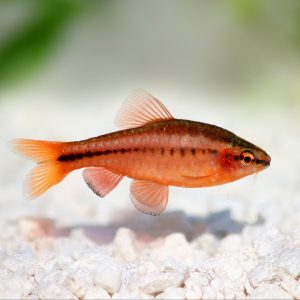
| Content | Danio rerio
Characteristics:
Max Size: 2.5″
Care Level: Easy
Behavior: Peaceful
Dwelling: Middle of tank
Diet: Omnivore
Water Movement: Slow Moving
Parameters
Temperature: 68° – 74°
PH: 6.5 – 7.5
dGH: 3 – 10
dKH: 3 – 7
Tank Size: 10 gal
Grouping: 5 or more
Tank Mates
Caridina and Neocaridina shrimp, Tetras, Rasboras, Celestial Pearl Danios, Hatchetfish, Mollies, Dwarf Gourami, Angelfish, Guppies, Loaches, Otocinclus, snails
Notes
Zebra Danios are very hardy and peaceful fish. They have elongated, narrow bodies with horizontal stripes from head to tail. They show shoaling tendencies when kept in large groups and go well with many other community fish. | Paracheirodon axelrodi
Characteristics:
Max Size: 2″
Care Level: Expert
Behavior: Peaceful
Dwelling: Middle of tank
Diet: Omnivore
Water Movement: Slow Moving
Parameters
Temperature: 73° – 81°
PH: 6.2 – 7
dGH: 3 – 6
dKH: 2 – 6
Tank Size: 10 gal
Grouping: 6 or more
Tank Mates
Tetras, Rasboras, Danios, Hatchetfish, Mollies, Dwarf Gourami, Angelfish, Guppies, Loaches, Otcinclus, dwarf shrimp and snails
Care
Cardinal Tetras require a more experienced fish keeper. They’re very sensitive to water changes and require softer to neutral waters. They’re able to reach 2” in size and the red & blue markings run the full length of their body. General rule is 2 gallons per fish. 10 Gallon tank at a minimum, but push for 20 or more for healthy and happy fish. Avoid aggressive or territorial species or large fish with big mouths such as cichlids.
Learn the difference between Cardinal vs. Neon Tetras | Puntigrus tetrazona
Characteristics:
Max Size: 3″
Care Level: Intermediate
Behavior: Semi-Aggressive
Dwelling: Middle of tank
Diet: Omnivore
Water Movement: Slow Moving
Parameters
Temperature: 72 – 82
PH: 6 – 8
dGH: 3 - 10
dKH: 4 – 7
Tank Size: 30 gal
Grouping: 6 or more
Tank Mates
Active and fast swimming community fish like Zebra Danios, Cories, Loaches, Platies and Rad-tailed sharks.
Avoid slowing moving, long finned fish like Bettas, Guppies, Gouramis, dwarf shrimps and small snails.
Notes
Fin Nippers! They may also nip at slower moving fish or fish with long-flowing fins. Shy, timid and slow community fish may not get to eat. | Celestichthys erythromicron
Characteristics:
Max Size: 1.5″
Care Level: Moderate
Behavior: Peaceful
Dwelling: Middle of tank
Diet: Omnivore
Water Movement: Slow Moving
Parameters
Temperature: 68 - 74
PH: 7 - 8
dGH: 4 – 12
dKH: 2 – 10
Tank Size: 20 gal
Grouping: 6 or more
Tank Mates
Neocardina shrimp, Neon Tetras, Rasboras, Danios, Hatchetfish, Mollies, Dwarf Gourami, Angelfish, Guppies, Loaches and Otocinclus
Notes
Emerald Dward Rasboras are sensitive to water change and prefer at least a neutral to more alkaline water condition. | Paracheirodon innesi
Characteristics:
Max Size: 1.25″
Care Level: Easy
Behavior: Peaceful
Dwelling: Middle of tank
Diet: Omnivore
Water Movement: Slow Moving
Parameters
Temperature: 68° – 75°
PH: 6 – 7.2
dGH: 4 – 8
dKH: 3 – 7
Tank Size: 10 gal
Grouping: 6 or more
Tank Mates
Tetras, Rasboras, Danios, Hatchetfish, Mollies, Dwarf Gourami, Angelfish, Guppies, Loaches, Otocinclus, dwarf shrimp and snails
Notes
Gold Neon Tetras are a cousin to Neon Tetras and are also great beginner fish. They can tolerate both acidic and low alkaline water conditions. General rule is 2 gallons per fish. 10 Gallon tank at a minimum, but push for 20 or more for healthy and happy fish. Avoid aggressive or territorial species or large fish with big mouths such as cichlids.
Learn the difference between Cardinal vs. Neon Tetras | Hyphessobrycon pulchripinnis
Characteristics:
Max Size: 2″
Care Level: Easy
Behavior: Peaceful
Dwelling: Middle of tank
Diet: Omnivore
Water Movement: Slow Moving
Parameters
Temperature: 68° – 75°
PH: 6 – 7.5
dGH: 4 – 8
dKH: 3 – 7
Tank Size: 20 gal
Grouping: 6 or more
Tank Mates
Tetras, Rasboras, Danios, Hatchetfish, Mollies, Dwarf Gourami, Angelfish, Guppies, Loaches, Otocinclus, dwarf shrimp and snails
Notes
Lemon Tetras have vibrant fins and a more flat, diamond shaped body. They're very active swimmers, so a 20 gallon tank would be ideal for a group of 6 or more. Avoid aggressive or territorial species or large fish with big mouths. |