| Content | Phenacogrammus Interruptus
Characteristics:
Max Size: 4″
Care Level: Easy
Behavior: Peaceful
Dwelling: Middle of Tank
Diet: Omnivore
Water Movement: Slow Moving
Parameters
Temperature: 68° – 80°
PH: 6 – 7.5
dGH: 4 – 8
dKH: 3 – 7
Tank Size: 30 gal
Grouping: 6 or more
Tank Mates
Tetras, Rasboras, Danios, Hatchetfish, Mollies, Dwarf Gourami, Angelfish, Guppies, Loaches, Otocinclus, dwarf shrimp and snails
Notes
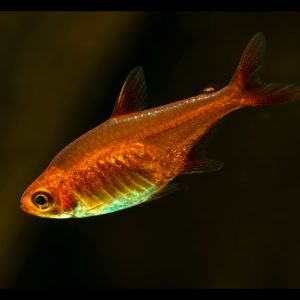
Congo Tetras are gaining popularity for their colorful orange bodies and schoaling tendencies. Compared to other tetras, they can get rather large, so provide at least a 30 gallon aquarium with ample room to swim. | Nematobrycon palmeri var. amphiloxus black
Characteristics:
Max Size: 2″
Care Level: Easy
Behavior: Peaceful
Dwelling: Middle of tank
Diet: Omnivore
Water Movement: Slow Moving
Parameters
Temperature: 73° – 81°
PH: 6.2 – 7.5
dGH: 3 – 6
dKH: 2 – 6
Tank Size: 10 gal
Grouping: 6 or more
Tank Mates
Tetras, Rasboras, Danios, Hatchetfish, Mollies, Dwarf Gourami, Angelfish, Guppies, Loaches, Otcinclus, dwarf shrimp and snails
Care
Black Emperor Tetras are relatively hardy fish. Keep in large groups to minimize male aggression. They’re able to reach 2” in size, males having blue eyes and females green. General rule is 2 gallons per fish. 10 Gallon tank at a minimum, but push for 20 or more for healthy and happy fish. Avoid aggressive or territorial species or large fish with big mouths. | Paracheirodon innesi
Characteristics:
Max Size: 1.25″
Care Level: Easy
Behavior: Peaceful
Dwelling: Middle of tank
Diet: Omnivore
Water Movement: Slow Moving
Parameters
Temperature: 68° – 75°
PH: 6 – 7.2
dGH: 4 – 8
dKH: 3 – 7
Tank Size: 10 gal
Grouping: 6 or more
Tank Mates
Tetras, Rasboras, Danios, Hatchetfish, Mollies, Dwarf Gourami, Angelfish, Guppies, Loaches, Otocinclus, dwarf shrimp and snails
Notes
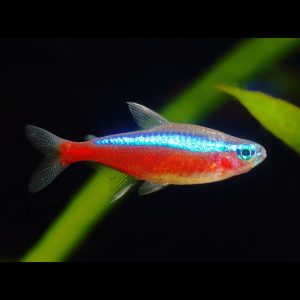
Gold Neon Tetras are a cousin to Neon Tetras and are also great beginner fish. They can tolerate both acidic and low alkaline water conditions. General rule is 2 gallons per fish. 10 Gallon tank at a minimum, but push for 20 or more for healthy and happy fish. Avoid aggressive or territorial species or large fish with big mouths such as cichlids.
Learn the difference between Cardinal vs. Neon Tetras | Hyphessobrycon eques var. Longfin
Characteristics:
Max Size: 2″
Care Level: Easy
Behavior: Peaceful
Dwelling: Middle of Tank
Diet: Omnivore
Water Movement: Slow Moving
Parameters
Temperature: 68° – 75°
PH: 6 – 7.5
dGH: 4 – 8
dKH: 3 – 7
Tank Size: 10 gal
Grouping: 6 or more
Tank Mates
Tetras, Rasboras, Danios, Hatchetfish, Mollies, Dwarf Gourami, Angelfish, Guppies, Loaches, Otocinclus, dwarf shrimp and snails
Notes
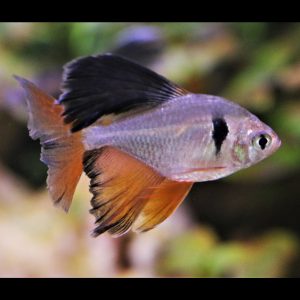
Serpae Tetras are also known as Red Minor Tetra, Jewel Tetra or Callistus Tetras, and are great beginner fish. The Longfin variant will have longer and more flowy dorsa and anal fins. They often have a black spot on their body and can get confused with Red Phantom Tetras. The Serpae Tetras dorsal and anal fin have red and transition to black with white tips. You can keep them in a 10 gallon tank, but push for a 20 gallon with larger groups. Avoid aggressive or territorial species or large fish with big mouths. | Puntigrus tetrazona
Characteristics:
Max Size: 3″
Care Level: Intermediate
Behavior: Semi-Aggressive
Dwelling: Middle of tank
Diet: Omnivore
Water Movement: Slow Moving
Parameters
Temperature: 72 – 82
PH: 6 – 8
dGH: 3 - 10
dKH: 4 – 7
Tank Size: 30 gal
Grouping: 6 or more
Tank Mates
Active and fast swimming community fish like Zebra Danios, Cories, Loaches, Platies and Rad-tailed sharks.
Avoid slowing moving, long finned fish like Bettas, Guppies, Gouramis, dwarf shrimps and small snails.
Notes
Fin Nippers! They may also nip at slower moving fish or fish with long-flowing fins. Shy, timid and slow community fish may not get to eat. | Trigonostigma heteromorpha
Characteristics:
Max Size: 2″
Care Level: Easy
Behavior: Peaceful
Dwelling: Middle of tank
Diet: Omnivore
Water Movement: Slow Moving
Parameters
Temperature: 72 – 82
PH: 6 - 7.2
dGH: 3 – 6
dKH: 4 – 8
Tank Size: 10 gal
Grouping: 6 or more
Tank Mates
Tetras, Rasboras, Danios, Hatchetfish, Mollies, Dwarf Gourami, Angelfish, Guppies, Loaches and Otocinclus
Notes
Avoid aggressive or territorial species or large fish with big mouths. |