| Content | Pseudacanthicus cf. leopardus
Characteristics:
Max Size: 12″
Care Level: Intermediate
Behavior: Peaceful
Dwelling: Bottom of tank
Diet: Omnivore
Water Movement: Moderate Flow
Parameters
Temperature: 72 - 86
PH: 6.0 - 7
dGH: 2 - 10
dKH: 6 - 10
Tank Size: 75 gal
Grouping: Single
Tank Mates
Although they prefer fast moving waters, they do just fine with moderate flow and can live with many nano community fish like Pencilfish, Tetras, Danios and Raboras. Their medium size make them suitable for larger fish as well such as angel fish and some cichlids. When keeping more than 1, keep a higher female to male ratio.
A large tank that not only provides the width for them to dwell at the bottom, but also a tall tank that can provide slow-moving relief for mid and top-dwelling fish.
Notes
Leopard Cactus Plecos (L114) come from brackish waters and prefer more soft, acidic water conditions. They're often confused with the variety (L600) which has slightly more orange fins and the patterns get smaller at the head. L114 will have a more uniform pattern across their body which is flatter in shape.
Plecos are nocturnal and prefer warmer waters. Provide a lot of hiding spaces including plants and caves. Although they're algae eaters, their diet cannot solely consist of algae. Supplement with wafers and other nutritious food, especially when they get older and larger.
They can be sensitive to nitrates, so keep it under control, preferably under 40 ppm. Males will have tentacles on their heads while females will be more limited to just their snout. They can change colors to slightly adjust to their environment, but sick Plecos will be dull in color
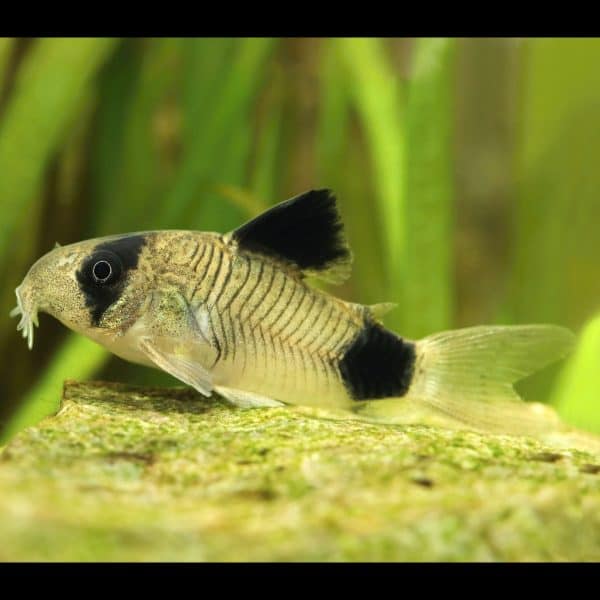
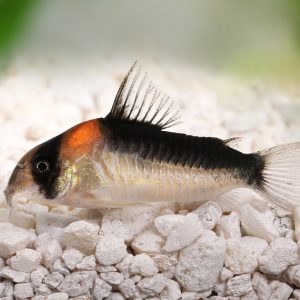
| Corydoras panda
Characteristics:
Max Size: 2″
Care Level: Easy
Behavior: Peaceful
Dwelling: Bottom of tank
Diet: Omnivore
Water Movement: Slow Moving
Parameters
Temperature: 72 – 78
PH: 6.5 – 7.3
dGH: 4 - 12
dKH: 3 – 7
Tank Size: 20 gal
Grouping: 6 or more
Tank Mates
Dwarf Corydoras are great tank mates with most shrimp species!
They're also great with Tetras, Rasboras, Danios, Hatchetfish, Mollies, Dwarf Gourami, Angelfish, Guppies, Loaches and Otocinclus
Notes
Smooth sand or gravel substrate preferred. They're not solely algae eaters, so provide wafers and other foods as well. Careful with aggressive fish eaters as they may not get enough nutrition at the bottom of tank. | Corydoras julii
Characteristics:
Max Size: 2 1/2″
Care Level: Easy
Behavior: Peaceful
Dwelling: Bottom of tank
Diet: Omnivore
Water Movement: Slow Moving
Parameters
Temperature: 72 – 78
PH: 6.5 – 7.3
dGH: 4 - 12
dKH: 3 – 7
Tank Size: 20 gal
Grouping: 6 or more
Tank Mates
Dwarf Corydoras are great tank mates with most shrimp species!
They're also great with Tetras, Rasboras, Danios, Hatchetfish, Mollies, Dwarf Gourami, Angelfish, Guppies, Loaches and Otocinclus
Notes
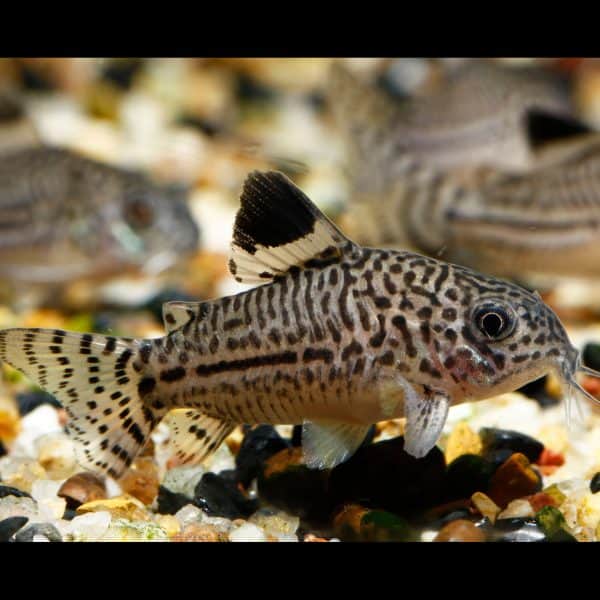
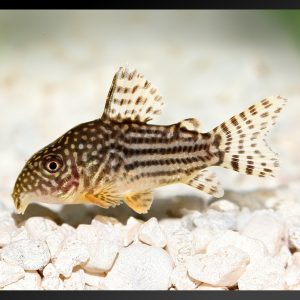
Julii Corydora are often confused with Leopard Corydoras. The difference is that Julii will have spots on the front part of their head, while Leopard will continue the same body pattern.
Provide Smooth sand or gravel substrate preferred. They're not solely algae eaters, so provide wafers and other foods as well. Careful with aggressive fish eaters as they may not get enough nutrition at the bottom of tank. | Corydoras duplicareus
Characteristics:
Max Size: 2″
Care Level: Easy
Behavior: Peaceful
Dwelling: Bottom of tank
Diet: Omnivore
Water Movement: Slow Moving
Parameters
Temperature: 72 – 78
PH: 6.5 – 7.3
dGH: 4 - 12
dKH: 3 – 7
Tank Size: 20 gal
Grouping: 6 or more
Tank Mates
Dwarf Corydoras are great tank mates with most shrimp species.
They're also great with Tetras, Rasboras, Danios, Hatchetfish, Mollies, Dwarf Gourami, Angelfish, Guppies, Loaches and Otocinclus
Notes
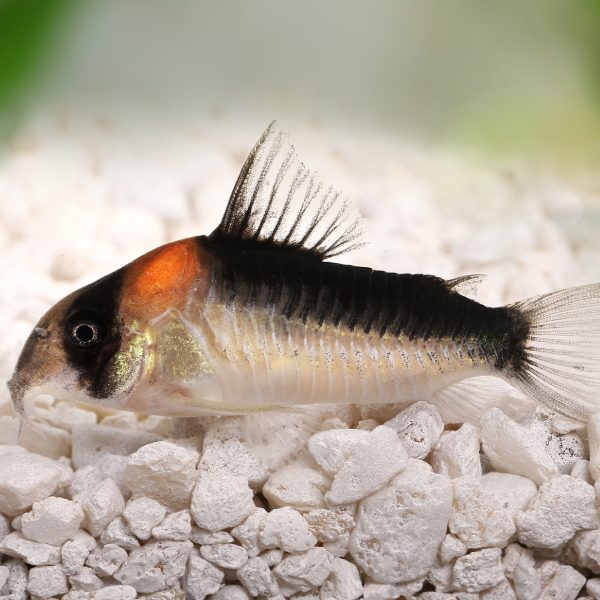
Smooth sand or gravel substrate preferred. They're not solely algae eaters, so provide wafers and other foods as well. Careful with aggressive fish eaters as they may not get enough nutrition at the bottom of tank. | Tuberoschistura arakanensis
Characteristics:
Max Size: 1.25″
Care Level: Easy
Behavior: Peaceful
Dwelling: Bottom of tank
Diet: Omnivore
Water Movement: Slow Moving
Parameters
Temperature: 74 – 82
PH: 6.5 - 7.8
dGH: 8 - 12
dKH: 4 - 8
Tank Size: 30 gal
Grouping: 8-10
Tank Mates
Neocaridina Shrimp, Amano Shrimp, Neon Tetras, Rasboras, Danios, Guppies and Otocinclus
Notes
Rosy loaches are one of the few nano size members in the loach family. They're active bottom feeders but are generally peaceful with the community. They can eat small snails and baby shrimp, but most adult shrimps are too big for their mouths and generally safe.
https://plantedtankmates.com/shrimp-tank-mates/
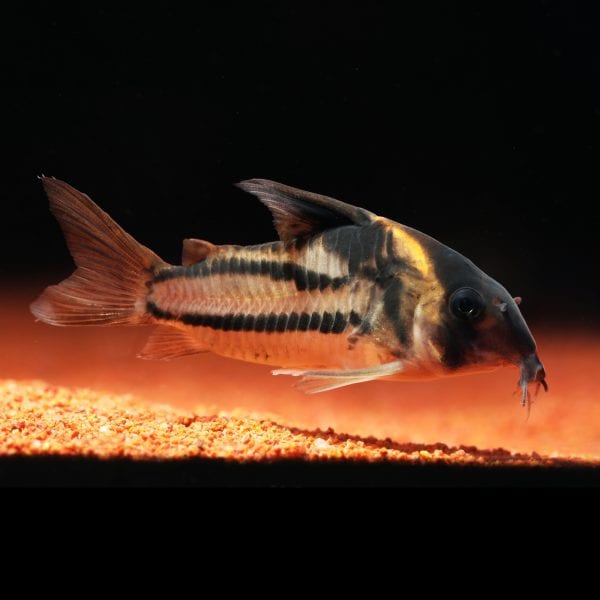
| Corydoras CW127
Characteristics:
Max Size: 2 1/2″
Care Level: Easy
Behavior: Peaceful
Dwelling: Bottom of tank
Diet: Omnivore
Water Movement: Slow Moving
Parameters
Temperature: 72 – 78
PH: 6.5 – 7.3
dGH: 4 - 12
dKH: 3 – 7
Tank Size: 20 gal
Grouping: 6 or more
Tank Mates
Dwarf Corydoras are great tank mates with most shrimp species!
They're also great with Tetras, Rasboras, Danios, Hatchetfish, Mollies, Dwarf Gourami, Angelfish, Guppies, Loaches and Otocinclus
Notes
Smooth sand or gravel substrate preferred. They're not solely algae eaters, so provide wafers and other foods as well. Careful with aggressive fish eaters as they may not get enough nutrition at the bottom of tank. |