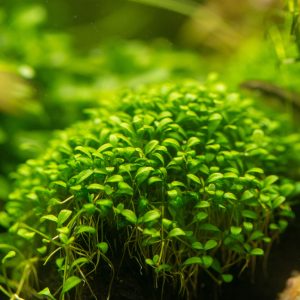
| Content | Echinodorus tenellus
Characteristics:
Max Size: 4″
Care Level: Easy
Nutrient Source: Root Feeder
Composition: Foreground + Carpet
Parameters
Co2: Not Required, but grows faster with
Light Level: Moderate
Tank Mates
Great for community fish and creates a nice habitat for bottom dwellers.
Notes
Pygmy Chain Swords spread with surface runners and can create a carpet like appearance. It has narrow blades and is often confused with Dwarf Sagittaria which has larger blades and grows in clusters. Provide nutrient rich substrate or feed root tabs to help promote its growth. They tend to grow taller with low lighting, but will stay dense and low with moderate to high lighting. | Alternanthera Reineckii "Mini"
Characteristics:
Max Size: 4″
Care Level: Easy
Nutrient Source: Root Feeder + Water Column
Composition: Midground
Parameters
Co2: Low
Light Level: Medium
Tank Mates
Great for community fish, shrimp and snails
Notes
"ARM" Alternanthera Reineckii Mini is a dwarf version of Alternanthera Reineckii Rosanervig. The underside is generally more red and the top yellow, but with proper substrate, lighting, CO2 and iron dosing, this plant can display vibrant red colors. Their leaves are susceptible to algae, so monitor and trim regularly.
Read more about how to maintain Red Aquarium Plants
See the diagrams on how you can setup CO2 for your aquarium | Hydrocotyle tripartita
Characteristics:
Max Size: 5"
Care Level: Medium
Nutrient Source: Root Feeder
Composition: Foreground
Parameters
Co2: Low - Medium
Light Level: Low
Tank Mates
Low foreground plants are great for invertebrates and bottom feeders to graze and hide.
Notes
Hydrocotle Japan make great foreground and midground plants. The clover-like appearance of this plant creates a unique carpet experience. It’s very hardy, undemanding and can quickly cover your foreground. High lighting will help this plant grow low and spread. Insufficient lighting will have the clovers reaching for the sky. CO2 again will help with density and compactness.
Compare carpet plant options and select the next one for your planted tank
See the diagrams on how you can setup CO2 for your aquarium | Anubias barteri
Characteristics:
Max Size: 7"
Care Level: Easy
Nutrient Source: Column Feeder
Composition: Background
Parameters
Co2: None
Light Level: Medium
Tank Mates
Anubias Barteri can be plated in soil or gravel, tied to rocks, driftwood or other substrate
Notes
One of the most popular aquarium plants. It's very hardy and easy to grow. It's a column feeder, so no need for expensive soil but do use liquid fertilizer.
https://plantedtankmates.com/aquarium-plants-for-beginners/ | Cryptocoryne Parva
Characteristics:
Max Size: 3″
Care Level: Easy
Nutrient Source: Root Feeder
Composition: Foreground + Carpet
Parameters
Co2: Not Required, but grows faster with
Light Level: Low
Tank Mates
Great for community fish and creates a nice habitat for bottom dwellers.
Notes
Very slow growing plant. They tend to melt when first introduced underwater. New sprouts will grow over time. Algae can grow on their leaves, so keeping them in partial shade is OK. Supplement with root feeders to keep them healthy and thriving.
https://plantedtankmates.com/aquarium-plants-for-beginners/ | Utricularia gramminifolia
Characteristics:
Max Size: 3"
Care Level: Advance
Nutrient Source: Root Feeder
Composition: Foreground
Parameters
Co2: Low - High
Light Level: High
Tank Mates
Low foreground plants are great for invertebrates and bottom feeders to graze and hide.
Notes
Utricularia Gramminifolia can be an amazing and bright green carpet in your aquarium, but it must be done right. They do better in an established tank and perfect conditions can produce white flowers to look like a blooming field. If not fully stuck in the soil, it can uplift and continue to grow in floating mats. These plants are carnivorous, but won’t chomp on your fishes or shrimp. It’s mainly a threat to very small crustaceans absorbing its nutrients and protein.
Compare carpet plant options and select the next one for your planted tank
See the diagrams on how you can setup CO2 for your aquarium |