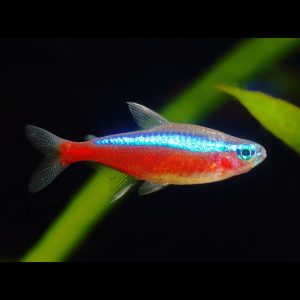
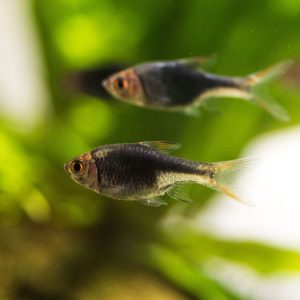
| Content | Puntius snyderi
Characteristics:
Max Size: 3.5″
Care Level: Easy
Behavior: Peaceful
Dwelling: Middle of tank
Diet: Omnivore
Water Movement: Moderate Moving
Parameters
Temperature: 72 – 82
PH: 6 – 7.5
dGH: 3 - 10
dKH: 4 – 7
Tank Size: 30 gal
Grouping: 6 or more
Tank Mates
Tetras, Rasboras, Danios, Hatchetfish, Platies, Loaches, Otocinclus and snails. Avoid fish with long fins like bettas and guppies.
Notes
Snyder's Barbs are actually peaceful compare to other barb species. They grow up to 3.5" in size and are great tank mates with general nano community fish. Males will exhibit bright red coloration when competing to mate and in general, these fish may nip at thin leaf plants. | Aphyocharax anisitsi
Characteristics:
Max Size: 2.5″
Care Level: Intermediate
Behavior: Peaceful
Dwelling: Middle of tank
Diet: Omnivore
Water Movement: Slow Moving
Parameters
Temperature: 78° – 85°
PH: 6.5 – 7.5
dGH: 6 – 14
dKH: 3 – 7
Tank Size: 20 gal
Grouping: Single
Tank Mates
Most nano fish and peaceful dwarf cichlids including but not limited to: Cherry Barbs, Tetras, Rasboras, Danios, Hatchetfish, Mollies, Dwarf Gourami, Guppies, Plecos, Dwarf Corydoras, Loaches, Otocinclus
Notes
German Blue Rams are popular for their super vibrant colors. They're a smaller and peaceful cichlid, but require tight water parameters and need a lot of space when housing more than one. | Puntius titteya
Characteristics:
Max Size: 2″
Care Level: Easy
Behavior: Peaceful
Dwelling: Middle of tank
Diet: Omnivore
Water Movement: Slow Moving
Parameters
Temperature: 72 – 82
PH: 6 – 8
dGH: 3 - 10
dKH: 4 – 7
Tank Size: 10 gal
Grouping: 6 or more
Tank Mates
Tetras, Rasboras, Danios, Hatchetfish, Platies, Loaches, Otocinclus and snails. Avoid fish with long fins like bettas and guppies.
Notes
Cherry Barbs are actually peaceful compare to other barb species. They grow up to 2" in size and are great tank mates with general nano community fish. | Aphyocharax anisitsi
Characteristics:
Max Size: 2″
Care Level: Easy
Behavior: Peaceful
Dwelling: Middle of tank
Diet: Omnivore
Water Movement: Slow Moving
Parameters
Temperature: 68° – 75°
PH: 6 – 7.2
dGH: 4 – 8
dKH: 3 – 7
Tank Size: 10 gal
Grouping: 6 or more
Tank Mates
Cardina and Neocaridina shrimp, Tetras, Rasboras, Danios, Hatchetfish, Mollies, Dwarf Gourami, Angelfish, Guppies, Loaches, Otocinclus, dwarf shrimp and snails
Notes
Bloodfin tetras can be both subtle and vibrant. Their silver bodies and red highlights make them great community fish. General rule is 2 gallons per fish. Provide a minimum of 10 gallons, but aim for 20 to provide extra room to swim. Avoid aggressive or territorial species or large fish with big mouths such as cichlids. | Hyphessobrycon herbertaxelrodi
Characteristics:
Max Size: 1.5″
Care Level: Easy
Behavior: Peaceful
Dwelling: Middle to Top
Diet: Omnivore
Water Movement: Slow Moving
Parameters
Temperature: 68° – 75°
PH: 6 – 7.5
dGH: 4 – 8
dKH: 3 – 7
Tank Size: 10 gal
Grouping: 6 or more
Tank Mates
Tetras, Rasboras, Danios, Hatchetfish, Mollies, Dwarf Gourami, Angelfish, Guppies, Loaches, Otocinclus, dwarf shrimp and snails
Notes
Black Neon Tetras are slightly larger than Neon Tetras and are great beginner fish. The reason is because they can tolerate both acidic and low alkaline water conditions. This makes them hardier than Cardinal Tetras and a bit easier to keep. General rule is 2 gallons per fish. 10 Gallon tank at a minimum, but push for 20 or more for healthy and happy fish. Avoid aggressive or territorial species or large fish with big mouths. Black Neon Tetras are generally more confident and you'll find them swimming near the top than hiding. | Carinotetraodon travancoricus
Characteristics:
Max Size: 1″
Care Level: Expert
Behavior: Aggressive
Dwelling: Middle of tank
Diet: Carnivore
Water Movement: Slow Moving
Parameters
Temperature: 74 – 82
PH: 7.2 - 7.5
dGH: 3 - 15
dKH: 3 - 10
Tank Size: 5 gal
Grouping: 1 or 6+
Tank Mates
Species Only tank recommended.
It's possible to keep with other fish and snails, but the setup has to be just right and you have to be lucky with a less aggressive puffer.
Notes
Aggressive and territorial. Provides lots of ground cover and space when having multiple puffers in one tank. Try to have 1 male for every 2-3 females to avoid fighting. The larger the tank the better, especially a wide tank with dense planting and lots space to shelter. Provide a minimum of 5 gallons for 1 puffer, add 3 more gallons for each additional puffer. |