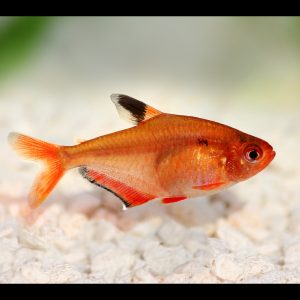
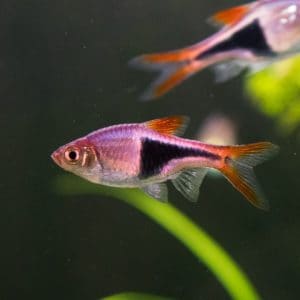
| Content | Puntius filamentosus
Characteristics:
Max Size: 6″
Care Level: Intermediate
Behavior: Semi-Aggressive
Dwelling: Middle of tank
Diet: Omnivore
Water Movement: Slow Moving
Parameters
Temperature: 72 – 82
PH: 6 – 7
dGH: 3 - 8
dKH: 2 – 6
Tank Size: 60 gal
Grouping: 6 or more
Tank Mates
Tetras, Rasboras, Danios, Hatchetfish, Gouramis, Platies, Loaches, Otocinclus and snails. Avoid long fin fish like guppies, bettas and angelfish.
This larger species will eat dwarf shrimp.
Notes
Black Spot Barbs are very active fish. Generally peaceful with community fish but can show aggression if kept single or in small groups. | Pethia padamya
Characteristics:
Max Size: 3″
Care Level: Intermediate
Behavior: Semi-Aggressive
Dwelling: Middle of tank
Diet: Omnivore
Water Movement: Slow Moving
Parameters
Temperature: 72 - 82
PH: 6 – 8
dGH: 3 - 10
dKH: 4 – 10
Tank Size: 30 gal
Grouping: 5 or more
Tank Mates
Active and fast swimming community fish like Zebra Danios, Cories, Loaches, Platies and Rad-tailed sharks.
Avoid slowing moving, long finned fish like Bettas, Guppies, Gouramis, dwarf shrimps and small snails.
Notes
The Odessa Barb can be aggressive with other Odessas in the same tank, particularly the males exerting dominance. They may also nip at slower moving fish or fish with long-flowing fins, such as Guppies, Angelfish, Betta fish, Goldfish, Gourami and small snails. | Hemigrammus rhodostomus
Characteristics:
Max Size: 1.75″
Care Level: Intermediate
Behavior: Peaceful
Dwelling: Middle of tank
Diet: Omnivore
Water Movement: Slow Moving
Parameters
Temperature: 72 – 84
PH: 6 – 7
dGH: 3-6
dKH: 2 – 8
Tank Size: 10 gal
Grouping: 6 or more
Tank Mates
Neon Tetras, Zebra Danios, Hatchetfish, Mollies, Dwarf Gourami, Angelfish and Guppies, Zebra Loaches, Yoyo Loaches and Otocinclus:
Notes
Aggressive or territorial species or large fish with big mouths such as cichlids. | Nematobrycon palmeri var. amphiloxus black
Characteristics:
Max Size: 2″
Care Level: Easy
Behavior: Peaceful
Dwelling: Middle of tank
Diet: Omnivore
Water Movement: Slow Moving
Parameters
Temperature: 73° – 81°
PH: 6.2 – 7.5
dGH: 3 – 6
dKH: 2 – 6
Tank Size: 10 gal
Grouping: 6 or more
Tank Mates
Tetras, Rasboras, Danios, Hatchetfish, Mollies, Dwarf Gourami, Angelfish, Guppies, Loaches, Otcinclus, dwarf shrimp and snails
Care
Black Emperor Tetras are relatively hardy fish. Keep in large groups to minimize male aggression. They’re able to reach 2” in size, males having blue eyes and females green. General rule is 2 gallons per fish. 10 Gallon tank at a minimum, but push for 20 or more for healthy and happy fish. Avoid aggressive or territorial species or large fish with big mouths. | Melanotaenia lacustris
Characteristics:
Max Size: 4″
Care Level: Intermediate
Behavior: Peaceful
Dwelling: Middle of tank
Diet: Omnivore
Water Movement: Slow Moving
Parameters
Temperature: 75° – 82°
PH: 7 – 8
dGH: 8 – 20
dKH: 3 – 7
Tank Size: 30 gal
Grouping: 6
Tank Mates
Cherry Barbs, Tetras, Rasboras, Danios, Dwarf Gouramis, Hatchetfish, Mollies, Guppies, Plecos, Dwarf Corydoras, Loaches, Otocinclus and even Dwarf Shrimp.
Notes
Also known as Lake Kutubu Rainbowfish or Blue Rainbowfish, Turquoise Rainbowfish are simlar Boesemani Rainbowfish and are peaceful middle-top dwellers with small mouths. They do well in a community with many nano fish including cherry barbs. Minimize plant and decoration density and aim for 48" long tank to give them ample swimming space. | Aphyocharax anisitsi
Characteristics:
Max Size: 2″
Care Level: Easy
Behavior: Peaceful
Dwelling: Middle of tank
Diet: Omnivore
Water Movement: Slow Moving
Parameters
Temperature: 68° – 75°
PH: 6 – 7.2
dGH: 4 – 8
dKH: 3 – 7
Tank Size: 10 gal
Grouping: 6 or more
Tank Mates
Cardina and Neocaridina shrimp, Tetras, Rasboras, Danios, Hatchetfish, Mollies, Dwarf Gourami, Angelfish, Guppies, Loaches, Otocinclus, dwarf shrimp and snails
Notes
Bloodfin tetras can be both subtle and vibrant. Their silver bodies and red highlights make them great community fish. General rule is 2 gallons per fish. Provide a minimum of 10 gallons, but aim for 20 to provide extra room to swim. Avoid aggressive or territorial species or large fish with big mouths such as cichlids. |